About
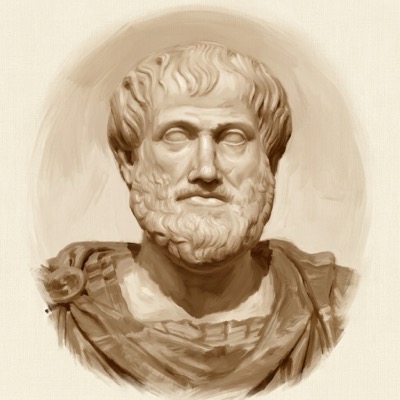
Aristotle (384–322 BC) was born in Stagira in northern Greece and studied at Plato's Academy in Athens for roughly twenty years, from his late teens until Plato's death. He later tutored the young Alexander the Great before returning to Athens around 335 BC to found his own school, the Lyceum, where he directed a program of research spanning logic, biology, physics, ethics, and politics. In the Nicomachean Ethics he distinguishes technē, the know-how of making or craft, from epistēmē, demonstrative knowledge of what cannot be otherwise, and from phronēsis, the practical wisdom that judges well in particular situations — a set of distinctions that still structures debates about what kind of knowledge skill and expertise really are. Only about a third of his original output survives, mostly lecture notes rather than works prepared for publication, yet they shaped Western thought for two millennia.
Key Contributions
- Studied at Plato's Academy for two decades before founding his own school, the Lyceum, in Athens
- Distinguished technē (craft knowledge) from epistēmē (scientific knowledge) and phronēsis (practical wisdom) in the Nicomachean Ethics
- Tutored Alexander the Great as a young prince in Macedon
- Wrote foundational works across logic, physics, biology, ethics, and politics, including the Physics and Metaphysics
- Established systematic empirical inquiry as a philosophical method, founding what became the discipline of biology
Questions they sharpened View the streams
Connections
Plato
Influenced byPhilosopher of Classical Athens
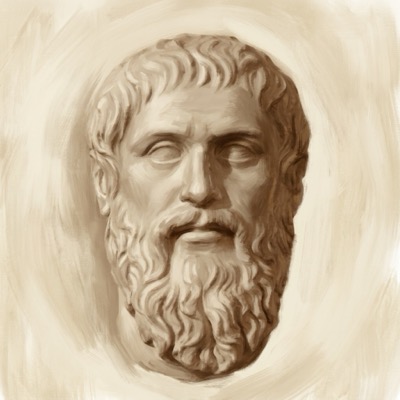
Aristotle came to the Academy at seventeen and stayed until Plato died, roughly two decades, and then spent a career taking the Forms back down to earth. His sharpest line against them is also his most affectionate: those who introduced the Forms are friends of ours, yet for the sake of truth it is better to give up even what is close to us. Western philosophy's first great inheritance is a student arguing with his teacher, and the argument was about whether the real lives above the world or inside its particulars.
plato.stanford.edu · Aristotle, Nicomachean Ethics I.6, 1096a11–17

Zena Hitz
InfluencedTutor, St. John's College
Lost in Thought is built on Aristotle's claim at the end of the Nicomachean Ethics, that the highest good is chosen for its own sake and finds its home in contemplative leisure. Hitz keeps the claim and widens it: Aristotle conceived contemplation too narrowly, as the philosopher's activity, when the leisure that crowns a life needs no estate and can be taken in a pause between chores. In an age that measures minds by output, hers is the old argument that thinking is worth doing when nothing is produced by it.
voegelinview.com · philpapers.org
Hans-Georg Gadamer
InfluencedPhilosopher & Founder of Hermeneutics
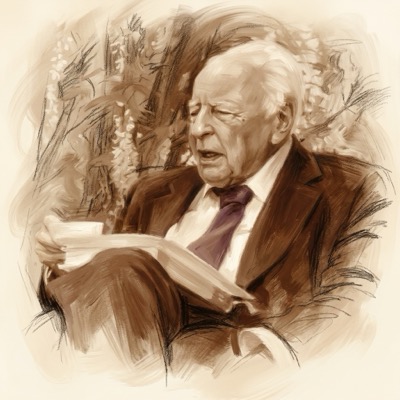
The model Gadamer found for understanding was not science but phronesis, the practical wisdom of Nicomachean Ethics VI: a knowing that cannot be taught directly and is always aimed at the particular case in front of it. Interpreting a text, on this view, is like judging what a situation asks of you, an application rather than a derivation. That is a demanding standard to bring to systems trained on general patterns, because it locates understanding in the handling of this case, not in knowledge of cases in general.
plato.stanford.edu
Michael Sandel
InfluencedPolitical Philosopher, Harvard University
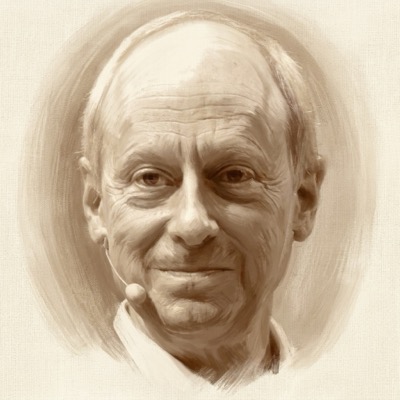
Against the liberal ideal of a state neutral among ways of life, Sandel argues as Aristotle did that justice has a telos: to ask what a practice is for is to ask what virtues it should honour and reward. His Justice turns from Bentham, Kant and Rawls to Aristotle to make that case, and with Daron Acemoglu he reaches back to Aristotle again, for the idea that democracy once meant government by lottery.
Michael J. Sandel, Justice: What's the Right Thing to Do? (2009) · en.wikipedia.org · youtube.com

