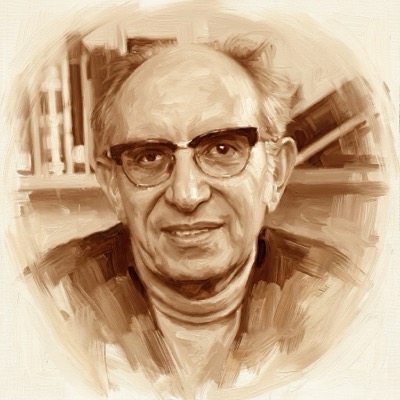
Yehoshua Bar-Hillel
Philosopher, Logician & Machine Translation Pioneer
從 Yehoshua Bar-Hillel 追溯路徑 →關於
Yehoshua Bar-Hillel (1915–1975) was an Israeli philosopher and logician who worked at the intersection of language, information, and computation. With Rudolf Carnap he developed a theory of semantic information (1952–1953), an early attempt to put meaning back into Shannon's meaning-free measure of information. He was the first academic to work full-time on machine translation, at MIT, and organized the first conference on the subject in 1952 — then became its most influential skeptic, arguing that fully automatic high-quality translation is impossible without world knowledge (his example: only knowing the world tells you whether 'the box is in the pen' means a writing pen or a playpen). He spent his later career at the Hebrew University of Jerusalem.
主要貢獻
- Developed a theory of semantic information with Rudolf Carnap, addressing meaning that Shannon's theory set aside
- Became the first full-time academic researcher in machine translation and organized its first conference (1952)
- Argued that fully automatic high-quality translation requires world knowledge, a landmark critique of early AI optimism
- Contributed the Bar-Hillel (pumping) lemma for context-free languages in formal language theory
- Helped found computational linguistics at the Hebrew University of Jerusalem
論文與出版物
思想連結
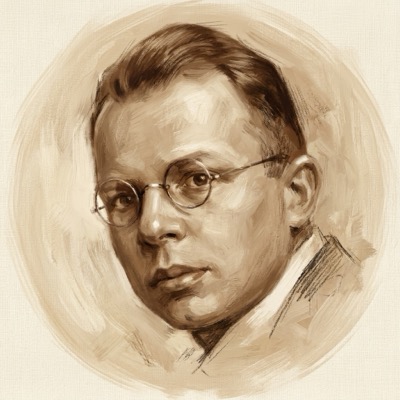
Rudolf Carnap
受其影響Philosopher & Logician
Bar-Hillel 年輕時讀了卡納普的《語言的邏輯句法》,1940 年代與他通信,1950 年到芝加哥成為他的博士後,並與他合寫了 1952 年的《語意資訊理論綱要》,試圖為夏農那種不涉意義的位元,補上一種衡量意義的尺度。這位門生後來把卡納普的邏輯帶進機器翻譯,回來時卻成了最尖銳的懷疑者。從前者到後者的這條線,是從「語言可以被完全形式化」的希望,走到發現語言有多少部分其實存在於對世界的認識之中。
en.wikipedia.org · Carnap & Bar-Hillel, An Outline of a Theory of Semantic Information, MIT RLE Technical Report 247 (1952)
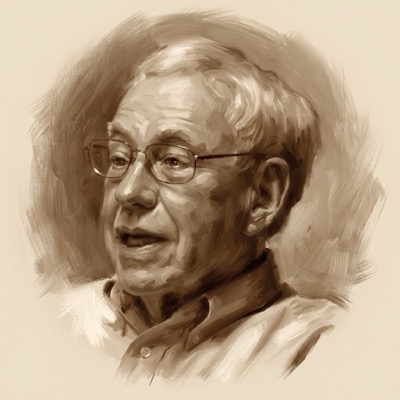
Hubert Dreyfus
影響了他/她哲學家與 AI 批評者
《What Computers Can't Do》在關鍵轉折處都倚靠 Bar-Hillel:他對機器翻譯現況的報告、他所說的「第一步成功的謬誤」,以及他的主張:既然我們所知的事實在某種深刻的意義上是無限的,替翻譯機配上一部百科全書的構想便「完全是空想」。Dreyfus 認為 Bar-Hillel 那個「盒子在筆/圍欄裡」的例子太偏物理,無限之說也講過頭了,但他接收了核心:理解一個句子,需要一整個世界。他也引用了 Bar-Hillel 的懷疑:無法「在精緻意義上」學習的機器,永遠翻譯不好。後來這個領域走的,正是這條路。
Hubert L. Dreyfus, What Computers Still Can't Do (MIT Press, 1992), esp. pp. 215–216 and notes; full text: https://archive.org/details/what-computers-still-cant-do-a-critique-of-artificial-reason-hubert-l-dreyfus · Bar-Hillel, "The Present Status of Automatic Translation of Languages", Advances in Computers 1 (1960)
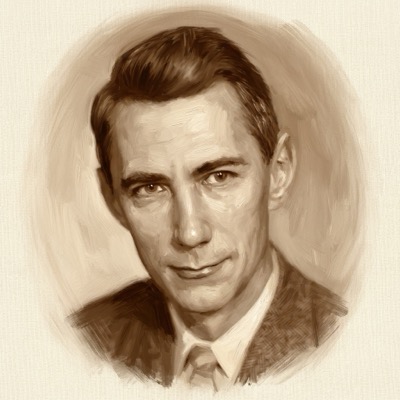
克勞德·夏農
受其影響數學家與資訊理論之父
夏農 1948 年的理論,交給了 Bar-Hillel 他要處理的問題。他與卡納普合寫《語意資訊理論綱要》(MIT,1952),是最早主張夏農量的是訊號傳輸、不是資訊,並試圖補上被略去之物的嘗試之一。他們的量度保留了夏農的對數,但計算的是一個句子排除了多少可能世界,而不是一個訊號有多不可能。Bar-Hillel 對夏農的虧欠,是異議者的虧欠:留下工具,換掉它所量的東西。他指出的那道位元與意義之間的鴻溝,至今每一場「token 是否承載意義」的爭論都還要跨越。
plato.stanford.edu · arxiv.org · dspace.mit.edu

