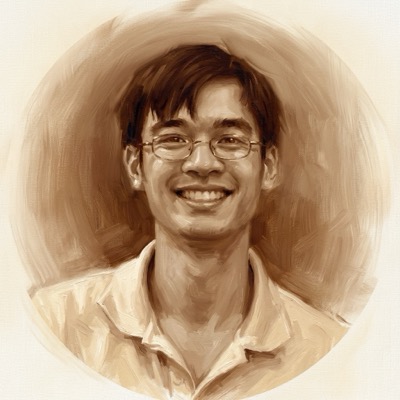
Terence Tao
Professor of Mathematics, UCLA
關於
Terence Tao is a mathematician at UCLA widely regarded as one of the greatest living mathematicians. Born in Adelaide, Australia, he was a child prodigy who earned his PhD from Princeton at age 21 and became UCLA's youngest-ever full professor at 24. He received the Fields Medal in 2006, the MacArthur Fellowship, the Breakthrough Prize in Mathematics, and the Royal Medal for his contributions spanning harmonic analysis, partial differential equations, combinatorics, and additive number theory. He has authored over 300 research papers and actively explores the role of AI in mathematics, including formal proof verification with tools like Lean.
主要貢獻
- Won the 2006 Fields Medal for work spanning harmonic analysis, PDEs, combinatorics, and number theory
- Co-proved the Green-Tao theorem, showing arbitrarily long arithmetic progressions in the primes
- Made major contributions to compressed sensing, dispersive PDEs, random matrices, and additive combinatorics
- Built an unusually open mathematical practice through his blog, lecture notes, expository writing, and collaborative problem solving
- Experiments publicly with proof assistants and AI tools such as Lean, Claude, and formalization workflows
- His AI optimism is grounded in practice, but he repeatedly stresses that current systems still need mathematical judgment and verification
影片與訪談
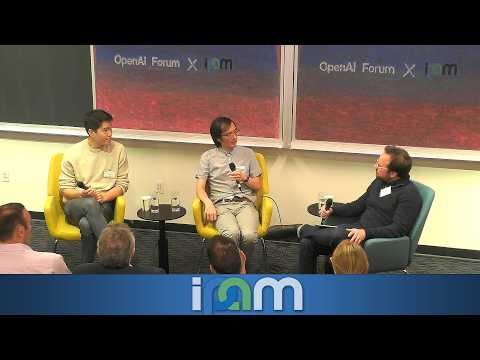
Terence Tao and Mark Chen - Fireside Chat with James Donovan - IPAM at UCLA
Fireside chat exploring the future of AI in mathematics at the OpenAI × UCLA IPAM convening
View Details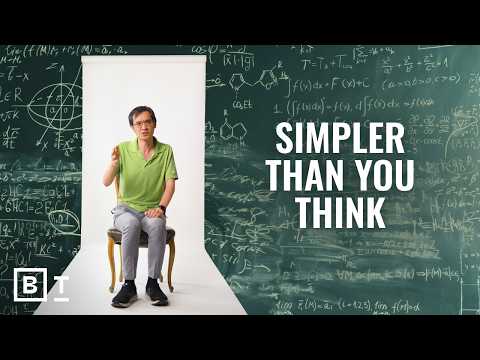
The world's greatest mathematician explains 6 essential concepts of math | Terence Tao
A Big Think full interview in which Tao — who says he has never had a single eureka moment — breaks mathematics down to six essential ideas: numbers, algebra, geometry, probability, analysis, and dynamics. The closing chapter on AI carries his sharpest image: science is a hike toward a waterfall, where getting lost is how you find the other waterfalls, and AI tools 'can be like helicopters that fly you directly there' — you arrive efficiently and learn nothing about the trail. His worry is precise: AI can speed up every individual step, 'but science as a whole may not necessarily accelerate just because every single component gets faster' — the danger is optimizing the wrong thing.
View Details
Formalizing a proof in Lean using Claude Code
Tao demonstrates using Claude Code to formalize a mathematical proof in the Lean proof assistant
View Details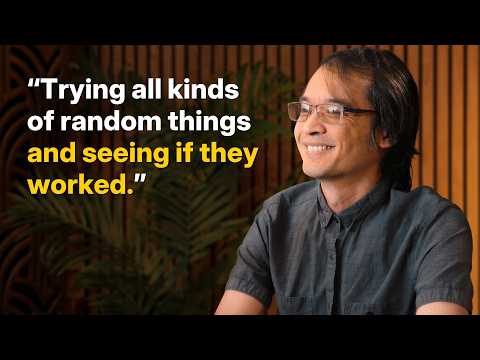
Terence Tao – AI is still brute force but it will revolutionize experimental math
Tao on how AI, despite being brute force, will transform experimental mathematics
View Details
The Potential for AI in Science and Mathematics
Oxford Mathematics public lecture on how AI could transform scientific and mathematical research
View Details思想連結
Dwarkesh Patel
曾經對談Dwarkesh Podcast 主持人
Patel 問出了目前為止關於「這些模型在數學裡還做不到什麼」最精確的一段陳述。陶哲軒說,它們會跳,但不會抓住一個著力點、停在那裡、把別人拉上來,再從那裡往上跳:「就是沒有那種互動地一層層累積起來的過程。看起來比較像是不斷試誤與重複:暴力法。」被追問「模型解出一道題,是否就因此更懂數學」時,他說不會——就算它做了題卻沒解出來也一樣。他也端出了帳目:大約一千一百題 Erdős 問題中,約有五十題在 AI 協助下被解掉,而好摘的果子已經摘完了。
youtube.com
Mark Chen
曾經對談Chief Research Officer, OpenAI
收錄於本站的這場 IPAM 爐邊對談,已是兩人三年來的第三次;主持人開場時,重提了陶哲軒早先對這些模型之於數學的評價:大概相當於一個很沒效率的研究生。這正是這個系列的價值所在——Chen 來自一間打造推理模型的實驗室,陶哲軒則來自一種「證明要嘛被驗證、要嘛什麼都不是」的實作,而每年重來一次,把一場分歧變成了一次量測。陶哲軒的興趣格外具體:他實際使用這些系統,並如實回報它們錯在哪裡。
youtube.com
François Chollet
思想同道AI Researcher & Creator of Keras
這是一組詮釋性的配對:兩個人從這門學科的兩端,量的是同一件事。Chollet 打造 ARC,是為了抓出「系統習得一項技能」與「系統只是持有一項技能」之間的差別,並堅持智慧是習得新技能的效率,而非儲存技能的廣度。陶哲軒則從實作數學的內部,以經驗回報同一道裂縫:模型可以把題解出來,而它對數學的理解與解題前一樣多。一個設計了基準測試來曝露「累積式學習」的缺席;另一個則是一題接一題地不斷撞見它,並以 Erdős 清單作為自己的記帳簿。
youtube.com · youtube.com