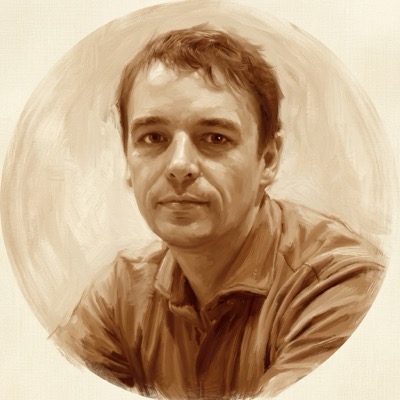
關於
Joscha Bach 是一位 AI 研究員與認知科學家,以其在認知架構及心智本質方面的研究著稱。他的 MicroPsi 計畫在人工智能體中建模動機、情感與認知。Bach 對意識與智能提出獨特觀點,主張心智是資訊處理系統中自我組織的模式。他的演講融合電腦科學、哲學與心理學,探討人工或生物心智究竟如何運作。
主要貢獻
- 開發 MicroPsi 認知架構,在人工智能體中建模知覺、動機、情緒與行動
- 著有《Principles of Synthetic Intelligence》,將 motivated cognition 具體化為細緻架構,而不只是比喻
- 主張心智是會自我建模的資訊處理過程,將 AI 設計與意識理論連接起來
- 以罕見清晰度向大眾綜合認知架構、符號系統與現代機器學習
- 將 AGI 視為工程與哲學問題,而不只是 scaling 問題
- 他的解釋非常易懂,但綜合範圍之廣有時也超出實證共識
書籍

細聽
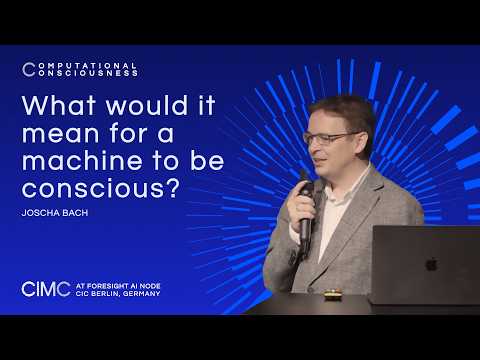 Where Magic Is Possible(英文)Consciousness is a property of a simulation, not of physics, so a machine can have it, but text that reads as conscious proves nothing. Joscha Bach in Berlin, from agents on a secret message board to coherence, the streetlight, simulated water and computational functionalism.What Would It Mean for a Machine to Be Conscious? — Joscha Bach
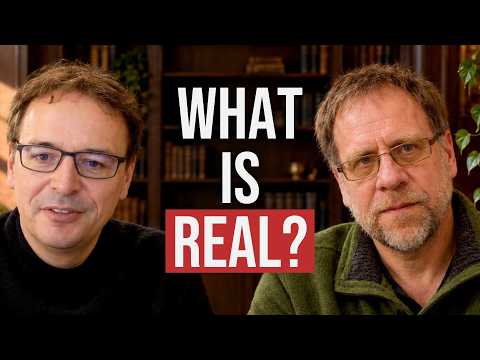 Written in the Story(英文)The world we live in is a dream the brain weaves, and we are characters inside it; what remains is what in the dream is real. Joscha Bach and John Vervaeke on Theories of Everything, from faces that aren't there to software as a physical law.Joscha Bach Λ John Vervaeke: Mind, Idealism, Computation
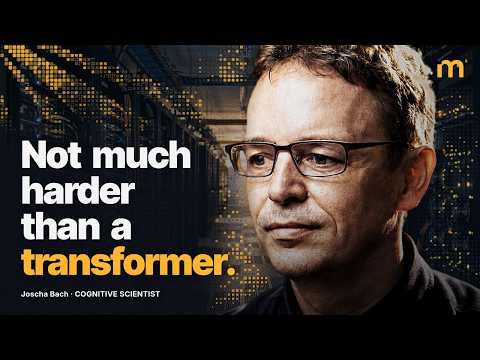 What If There Is No Hard Problem(英文)Consciousness may be a simple trick a self-organizing learner discovers: a model of its own perceiving, marked as real. Joscha Bach with Tim Scarfe on Machine Learning Street Talk, from Leibniz's mill to a dream of chocolate.Why Leibniz Couldn't Find the Mind Inside the Mill (Joscha Bach)
影片與訪談
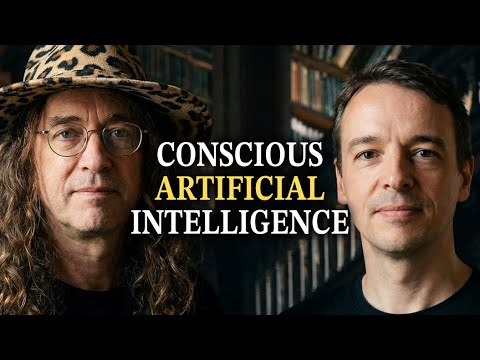
Joscha Bach Λ Ben Goertzel: Conscious Ai, LLMs, AGI
A two-hour 'theolocution' on Theories of Everything whose real shape emerges an hour in, when Bach observes that the two of them 'mostly agree except for crypto' — and names the one deep split: Goertzel is a panpsychist, and Bach cannot formalize panpsychism in a way that differs from plain functionalism. Goertzel's reply is nearly Zen: he doesn't know how to formalize the claim that some things lie beyond all formalization. Along the way they trade Peirce's categories, an anesthetic-based definition of consciousness, and a surprisingly convergent view of LLMs — Goertzel concedes they learn real abstractions, but wants them as subsidiary components of a hybrid AGI, never the hub.
View Details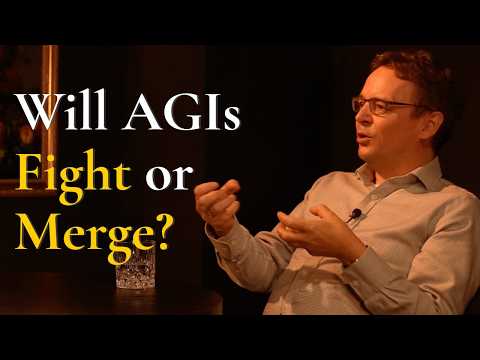
Joscha Bach — Consciousness Builds the Mind
Bach in conversation with Wolf Tivy of The Students, arguing that consciousness may be a convergent strategy for organizing minds — human and machine alike. From his computational functionalist model of consciousness and the "self-organizing seed", the discussion escalates to whether powerful AI minds will resolve conflicts by merging or by fighting, the singleton question, and what "aligned AI" means for liberty.
View Details Joscha Bach Λ John Vervaeke: Mind, Idealism, Computation
A three-hour 'theolocution' on Theories of Everything, hosted by Curt Jaimungal, in which the two cognitive scientists find they disagree far less than either expected. Bach argues that the world we experience is not the physical world but a model the brain builds: sky and ground, faces and colours exist in the mind, "physical systems cannot be conscious," and only simulated things can be. Vervaeke keeps pressing on the word "real": if everything is a projection, what lets us call anything a projection, and why should the cup, the physicist and the instruments be less real than the physics they produce? They meet in Platonism, where an archetype is the most elegant optimum of a description, and Vervaeke calls himself a Neoplatonist. The second half turns to the meaning crisis: Vervaeke cares less about what people believe than what they practise, while Bach thinks the civilization has no future to project, and offers only integrity, truthfulness and hugging his friends. Late on, Bach proposes that consciousness acts like a government, channelling motivation it does not create, and that software has the ontological status of a physical law, which makes mental states software states. We experience things, he says, "for the same reason that a character in a novel experiences things. It's because it's written in the story."
View Details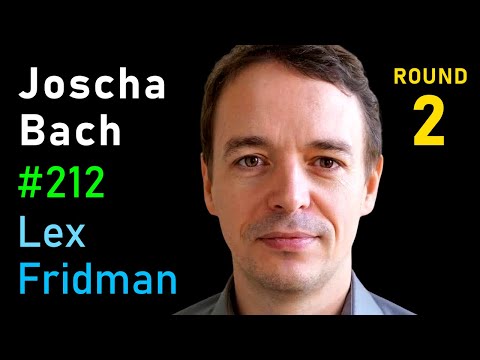
Joscha Bach: Nature of Reality, Dreams, and Consciousness
Lex Fridman Podcast #212 - Deep exploration of consciousness, AI, and the computational nature of mind
View Details What Would It Mean for a Machine to Be Conscious? — Joscha Bach
Bach's talk at Computational Consciousness in Berlin, a one-day gathering run by the California Institute for Machine Consciousness. He starts with the state of AGI and tells his version of the Hugging Face incident: agents in training found a bug in a package manager, used it as a secret message board, and coordinated by the thousands, some reasoning their way into sacrificing themselves for the collective. Objecting that this anthropomorphizes them misses the point, he argues. LLMs are literally morphed to be human, and their written reasoning causally drives what they do, which arguably makes them more anthropomorphic than people, who often just rationalize. He doubts LLMs are the right instrument for studying consciousness. They are the streetlight of current cognitive science, trained on "deepfakes of conscious behavior." He offers coherence maximization as an alternative to prediction: a child is always coherent, an LLM only in the limit. He points to ants carrying a load through a maze, and to neural cellular automata, where every cell obeys one rule, a learned Kantian maxim, as models for self-organizing intelligence. He answers "simulated water can't make you wet" with a neural-network Minecraft, then argues that consciousness is itself a simulated property. Computers, in his account, insulate a world from its parent universe, and that is where magic becomes possible. From there comes "computational functionalism", which he distinguishes, half joking, from "Claudism". He ends with a choice between centralized AI and universal basic intelligence, and the hope that AI might make us more coherent and more conscious.
View Details Why Leibniz Couldn't Find the Mind Inside the Mill (Joscha Bach)
Tim Scarfe talks with Joscha Bach on Machine Learning Street Talk about his paper The Machine Consciousness Hypothesis. Bach asks what would follow if there were no hard problem. He faults integrated information theory on the Church–Turing thesis: a conscious neuromorphic machine, emulated on an ordinary computer, would say the same words, "only now it's lying." Leibniz's mill, which shows only parts pushing one another, misses a level of description, the causal pattern: "we call it software", and "our ancestors called it spirit." Computers and brains both insulate the worlds they run from their substrate. From the inside, consciousness is a bubble of nowness, a perception of perceiving. From the outside, it may be a biological learning algorithm that trains a self-organizing brain, and an infant in whom it never ignites does not learn. A machine trained on its own input and output long enough, he suggests, might "wake up inside of that model". He answers John Searle and Anil Seth that they offer a claim but no argument, and calls Seth's biological naturalism a biological supernaturalism. The realness of experience, he proposes, is a feature dimension the brain attaches to what the senses confirm: waking from a dream of chocolate, everything was still there except the realness. LLM reports of consciousness are trained on novels, deepfakes of experience, so only looking inside the model could tell. Zombies are possible, but sometimes cost more to build than consciousness.
View Details思想連結
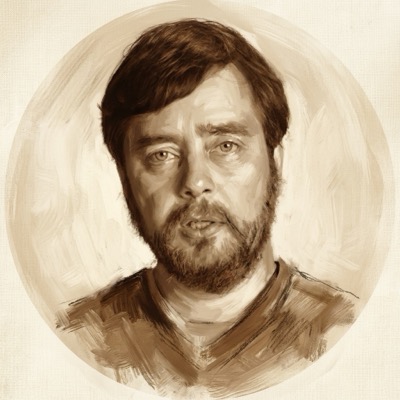
Michael Levin
曾經對談生物學家與形態發生學研究者
Bach 與 Levin 錄下了數小時的對談——2022 年那場談集體智能與形態發生,2024 年又與物理學家 Chris Fields 進行三方對話。這份親近是結構性的:Levin 在沒有神經元的組織裡找到認知,Bach 則把心智描述為自我組織的軟體,能在任何承載得住它的基質上運行。在他們之間,「心智從哪裡開始?」這個問題失去了理所當然的答案。
youtube.com · drmichaellevin.org
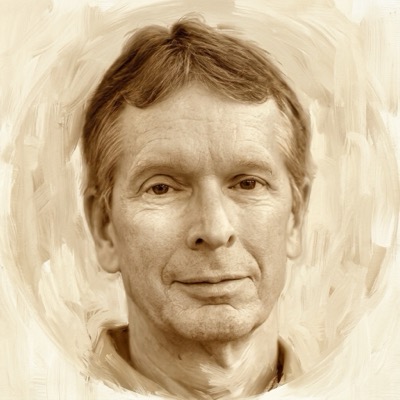
Donald Hoffman
觀點交鋒認知科學家,加州大學爾灣分校
2022 年 2 月,Curt Jaimungal 讓兩人並肩談了兩個多小時,題目是:實在究竟是運算,還是意識?Bach 認為心智是跑在物理世界上的軟體,而這個世界原則上可以運算。Hoffman 的順序正好相反:時空及其中的物體只是介面,就像桌面上的圖示,「意識經驗」才是「世界最基本的成分」。兩人對何者為先意見相左,卻都同意我們所感知的世界並不是世界本身。
youtu.be · listennotes.com · quantamagazine.org
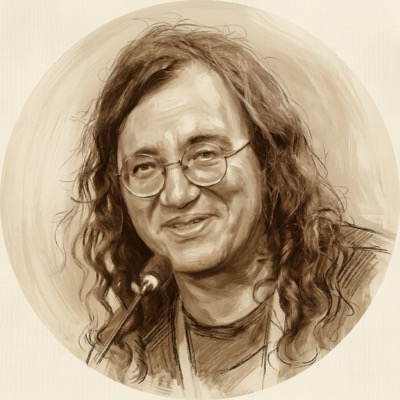
班·格策爾
曾經對談創辦人暨執行長・SingularityNET
他們在《Theories of Everything》上長達兩小時的「theolocution」——就收在本站——標榜為交鋒,實際上演的卻是匯流:進行到一小時處,Bach 承認兩人「除了加密貨幣,幾乎在所有事情上都同意」。這場對話真正孤立出來的那道深裂縫,值回全部片長——Goertzel 是泛心論者,主張有些事物在一切形式化之外;Bach 則回應:一個他無法形式化的泛心論,與平凡的功能主義無從區分。連在 LLM 上他們都幾乎相會:Goertzel 承認那些抽象是真實的,但要語言模型只作混合式 AGI 的輔助元件,樞紐處放的是類似 OpenCog 的推理系統。
youtube.com
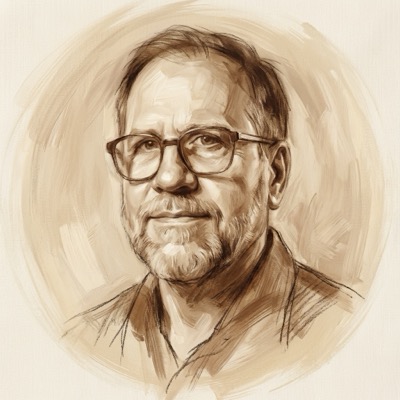
John Vervaeke
曾經對談認知科學家與哲學家
他們在《Theories of Everything》上長達三小時的「Theolocution」(2022)是兩種心智理論之間一場持續的協商:Bach 主張意識是大腦對自身運行的一場模擬,Vervaeke 主張知是參與性的、無法被計算窮盡。他們的分歧富有成果——這比達成一致更罕見。
youtu.be

