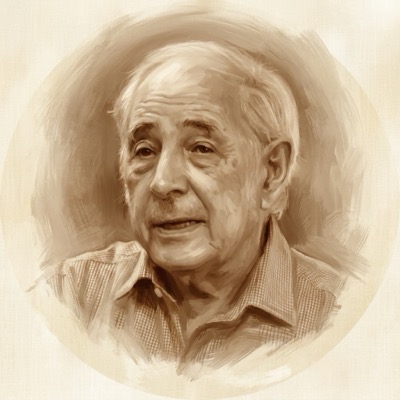
John Searle
Philosopher of Mind & Language
關於
John Searle (b. 1932) is an American philosopher whose 1980 Chinese Room argument became the most-debated objection to machine understanding ever posed: a person following rules to manipulate Chinese symbols can pass for a speaker while understanding nothing, so syntax alone cannot produce semantics. Earlier, his work on speech acts showed how saying is a kind of doing. His 'biological naturalism' holds that consciousness is a real, causal, biological phenomenon — neither reducible to computation nor separate from the brain.
主要貢獻
- Posed the Chinese Room argument (1980), the canonical challenge to the claim that symbol manipulation amounts to understanding
- Developed speech act theory, showing how utterances perform actions rather than merely describe
- Articulated biological naturalism: consciousness as a causal, biological feature of brains
- Distinguished 'strong AI' from 'weak AI', vocabulary the debate still uses
- Kept the syntax/semantics distinction at the center of machine-understanding debates for four decades