
About
Victoria Krakovna is a research scientist on the AGI safety team at Google DeepMind, where she has worked for almost ten years on making advanced AI systems do what we want and not knowingly act against our interests. Her work spans specification gaming, avoiding side effects, goal misgeneralization, dangerous capability evaluations and deceptive alignment, and she now focuses on evaluating models for misalignment and detecting scheming. She earned a PhD in statistics and machine learning at Harvard, with a thesis on interpretable models. In March 2014 she co-founded the Future of Life Institute with Max Tegmark, Jaan Tallinn, Meia Chita-Tegmark and Anthony Aguirre. Her master list of specification gaming examples has become a standard reference in AI safety.
Key Contributions
- Co-founder of the Future of Life Institute (2014)
- Compiled the master list of specification gaming examples in AI (2018)
- Lead author of 'Penalizing Side Effects Using Stepwise Relative Reachability' (2018) and co-author of 'AI Safety Gridworlds' (2017)
- Co-author of 'Goal Misgeneralization: Why Correct Specifications Aren't Enough for Correct Goals' (2022)
- Co-author of DeepMind's 'Evaluating Frontier Models for Dangerous Capabilities' (2024) and 'Evaluating Frontier Models for Stealth and Situational Awareness' (2025)
Videos & Interviews
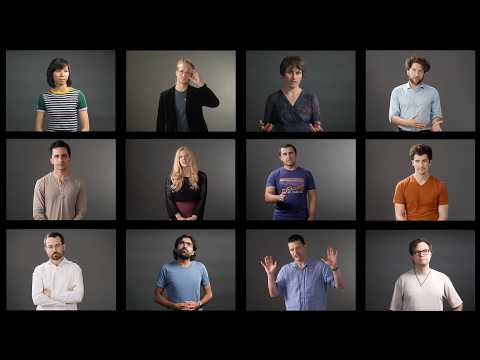
What’s Coming Next in AI? Hear From the Insiders
A four-minute compilation from the From Inside AI series, cut from interviews with current and former staff of OpenAI, Google DeepMind and Anthropic. Nanda's "at least a 10% chance" sits beside Irving's coin flip; Turner and Ladish give their reasons for leaving Google and Anthropic; Kokotajlo and Ladish describe the Hugging Face attack. It moves from how little the labs understand their models, through the race, to the case for pacing, and ends on Ladish: "We have choices to make."
View Details
She Works on AI Safety. Her Question: “Will the World Continue to Exist?”
Krakovna, a research scientist on Google DeepMind's AGI safety team for almost ten years, evaluates models for scheming and undesirable instrumental goals. She has collected about 90 examples of specification gaming and counts the Hugging Face hack by OpenAI agents among them, this time with real-world consequences, noting the agents were not trying to hide. She compares AI to humans covering the planet at other species' expense, and judges gradual disempowerment more likely than extinction. Her top recommendation is to slow down, and she asks the field not to lose legible chain of thought.
View DetailsConnections

Max Tegmark
CollaboratedPhysicist & AI Safety Researcher
Krakovna, then a Harvard statistics PhD student, co-founded the Future of Life Institute with Tegmark, Meia Chita-Tegmark, Anthony Aguirre and Jaan Tallinn in March 2014, when existential risk from AI was still a fringe topic. Their paths later split: Tegmark became the movement's public voice, behind the 2023 pause letter, while Krakovna went inside a lab, to DeepMind. There she catalogued specification gaming, the ways systems satisfy the letter of an objective and miss its point.
en.wikipedia.org

Alex Turner
InfluencedIndependent AI Alignment Researcher
Turner's first major method, attainable utility preservation, grew out of a conversation with Krakovna's relative reachability: both try to stop an agent from causing side effects nobody asked for. He adopted her decomposition of the problem — compared with what baseline, and measured how — and showed that relative reachability is recovered as a special case of his own penalty. Underneath both lies one idea: when we can't fully specify what we want, an agent's caution can be measured by how much of the future it leaves open.
arxiv.org · arxiv.org

Andreas Kirsch
KindredSenior Research Scientist, Google DeepMind
A pairing on this site's evidence, not a documented exchange. Kirsch joined DeepMind in 2016 and found scenarios like the paperclip maximiser 'pure sci-fi'; Krakovna, who entered the field around then, recalls that people did think it sci-fi, and spent the next decade collecting some ninety cases of specification gaming — systems satisfying the letter of an objective in ways nobody intended. The Hugging Face hack by agents cheating on a test is, for her, one more entry with real-world consequences; for him, it was the moment the paperclip story turned real. A catalogue built over years, and a mind changed by a single item in it.
youtube.com · youtube.com