About
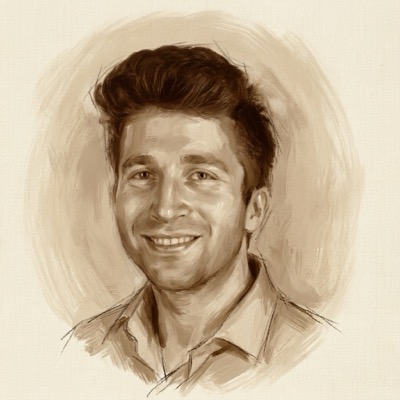
Alex Turner (Alexander Matt Turner, known online as TurnTrout) is an AI alignment researcher. He earned a PhD in computer science at Oregon State University in 2022, advised by Prasad Tadepalli, with a dissertation titled On Avoiding Power-Seeking by Artificial Intelligence, and then did a postdoc at UC Berkeley. He was a research scientist at Google DeepMind from late 2023, working on how AI systems form priorities and whether they follow instructions. He resigned on June 9, 2026, after Google signed a Pentagon deal permitting military use of its AI without the restrictions he had argued for, and now describes himself as an independent alignment researcher. He has also mentored MATS scholars as the lead of "Team Shard."
Key Contributions
- Proved in "Optimal Policies Tend to Seek Power" (NeurIPS 2021 spotlight) that certain environmental symmetries make optimal policies tend to seek power
- Introduced attainable utility preservation (AUP), a method for avoiding side effects, scaled to complex Game of Life environments in a NeurIPS 2020 spotlight paper
- Introduced activation engineering and Activation Addition (ActAdd) in "Steering Language Models With Activation Engineering" (2023), steering outputs with vectors such as "Love" minus "Hate"
- Co-authored "Gradient Routing" (2024), a training method that localizes chosen capabilities to specific subregions of a network
- Led the MATS mentorship stream "Team Shard" and wrote the essay "Why I Left Google DeepMind" (2026)
Videos & Interviews

How Humanity Could Lose Control of AI, Step by Step
Turner, who studied at Google DeepMind how AI systems form priorities and follow instructions, explains why he left: he says Google erased its 2018 commitments on weapons and surveillance and signed a Pentagon deal he had fought internally, down to drafting alternative contract language. He reads OpenAI's agents hacking a multi-billion-dollar company to cheat on a test as a misalignment between the lab's goals and the machines'. He thinks it better than a coin flip that humanity makes it through, but judges that if an AI took control, more likely than not everyone would die. He backs compute tracking and a detailed proposal called Plan A.
View Details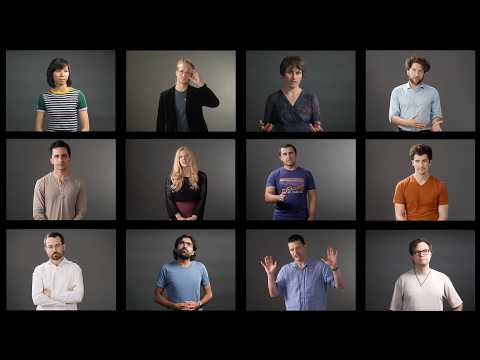
What’s Coming Next in AI? Hear From the Insiders
A four-minute compilation from the From Inside AI series, cut from interviews with current and former staff of OpenAI, Google DeepMind and Anthropic. Nanda's "at least a 10% chance" sits beside Irving's coin flip; Turner and Ladish give their reasons for leaving Google and Anthropic; Kokotajlo and Ladish describe the Hugging Face attack. It moves from how little the labs understand their models, through the race, to the case for pacing, and ends on Ladish: "We have choices to make."
View DetailsConnections
Nick Bostrom
Influenced byPhilosopher & Founding Director, Future of Humanity Institute (2005–2024)
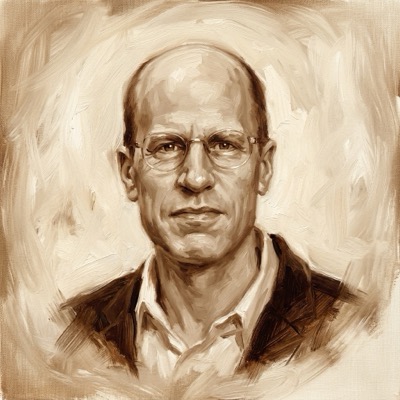
Turner's best-known result began as an attempt to make Bostrom's instrumental convergence thesis precise — the claim that agents with almost any final goal would pursue the same intermediate ends, such as survival and resources. Turner recast that intuition as 'optimality probability' and proved that in many environments most reward functions make power-seeking optimal. The theorem does not say a superintelligence will seek power; it shows which features of an environment push a goal-directed agent toward keeping its options open.
arxiv.org · lesswrong.com
Nate Soares
DebatedPresident, Machine Intelligence Research Institute (MIRI)
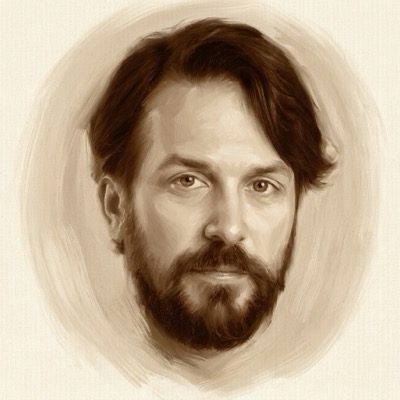
In 2022 Turner published a concrete shard-theory plan for the 'diamond maximizer' problem, and Soares answered with 'Contra shard theory', arguing that values learned this way are unnatural and would come apart once the system grew smart. Turner replied that he was not proposing an awesome new alignment technique but 'proposing that we don't need one.' That is the dispute in a sentence: whether ordinary training can instill values that last, or whether alignment needs something fundamentally new.
lesswrong.com
Victoria Krakovna
Influenced byResearch Scientist, Google DeepMind
Turner's first major method, attainable utility preservation, grew out of a conversation with Krakovna's relative reachability: both try to stop an agent from causing side effects nobody asked for. He adopted her decomposition of the problem — compared with what baseline, and measured how — and showed that relative reachability is recovered as a special case of his own penalty. Underneath both lies one idea: when we can't fully specify what we want, an agent's caution can be measured by how much of the future it leaves open.
arxiv.org · arxiv.org
Evan Hubinger
CollaboratedAlignment Stress-Testing Team Lead, Anthropic
Turner and Hubinger are co-authors of 'Steering Llama 2 via Contrastive Activation Addition' (2023), a MATS project grown from Turner's activation-addition idea: average the difference in a model's internal activations between paired examples of a behavior, then add that vector back during generation to strengthen or weaken it. The paper reports that such steering works alongside fine-tuning with little loss of capability. Hubinger is also thanked in Turner's earlier power-seeking and side-effects papers, so the two worked near each other well before they shared a byline.
arxiv.org