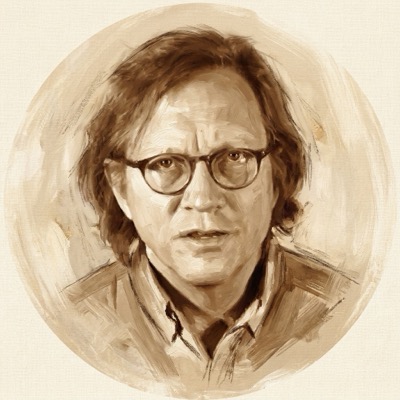
Tim Maudlin
Philosopher of Physics, New York University; Founder, John Bell Institute for the Foundations of Physics
Trace a path from Tim Maudlin →Portrait painted after an image by Philosophy at the University of Edinburgh · CC BY 4.0
About
Tim Maudlin is an American philosopher of science whose work on the metaphysical foundations of physics and logic has been widely influential. He studied physics and philosophy at Yale and earned his PhD in history and philosophy of science at the University of Pittsburgh in 1986, under Clark Glymour. He taught at Rutgers University for more than two decades before joining New York University's Department of Philosophy in 2010. He founded the John Bell Institute for the Foundations of Physics, was elected a fellow of the American Academy of Arts & Sciences in 2015, and has held a Guggenheim Fellowship. He argues that Bell's theorem proves the world is nonlocal, and that what troubled Einstein about quantum theory was action at a distance, not chance.
Key Contributions
- Quantum Non-Locality and Relativity (1994), on what Bell's theorem means for relativity
- The Metaphysics Within Physics (2007), arguing that laws of nature are primitive and that time's passage is fundamental
- Truth and Paradox (2004), a resolution of the Liar paradox that modifies classical logic
- Philosophy of Physics: Space and Time (2012) and Quantum Theory (2019), and New Foundations for Physical Geometry (2014)
- Founded the John Bell Institute for the Foundations of Physics, which runs summer schools and workshops
Videos & Interviews

‘Locality Is Dead. It’s Out the Window.’
Tim Maudlin picks up from EPR with Bohm's spin version and Bell's theorem, and concludes that any theory matching the predictions of quantum mechanics must be nonlocal. The second part of his lecture series with Curt Jaimungal.
View Details
Quantum Mechanics Explained FROM SCRATCH
Tim Maudlin walks slowly through Einstein's objections to quantum theory, from the 1927 pinhole to the EPR argument, showing that the worry was action at a distance, not chance. The first part of his lecture series with Curt Jaimungal; it stops just before Bell's theorem.
View DetailsConnections

Curt Jaimungal
In conversationFilmmaker; Host of Theories of Everything
Jaimungal gave Maudlin something a podcast rarely gives: hours, a board, and a student's interruptions. Across two lectures Maudlin rebuilds quantum mechanics from the EPR paper forward, through Bohm's spin version to Bell's theorem, and arrives at the claim he has defended for thirty years: any theory that matches the predictions must be nonlocal. Both lectures are on this site.
youtube.com · youtube.com
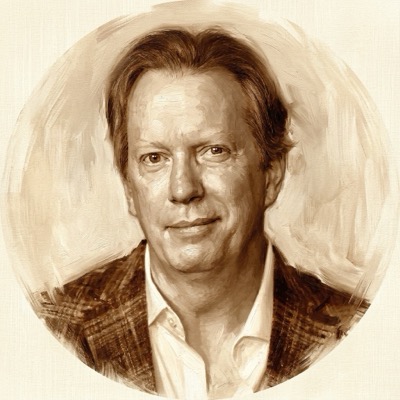
Sean Carroll
In conversationHomewood Professor of Natural Philosophy, Johns Hopkins University
Carroll, who defends the many-worlds reading of quantum mechanics, invited one of its sharpest skeptics onto Mindscape in 2023, saying he wanted to give voice to sensible voices on the other side. They spent the episode on hidden-variable theories such as Bohmian mechanics and on why foundations matter at all. In his lectures on this site Maudlin calls him 'my friend Sean Carroll' and then teases him for it, which is the tone of the whole disagreement.
preposterousuniverse.com · youtube.com
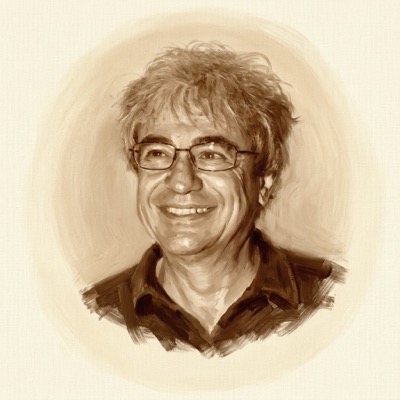
Carlo Rovelli
In contrastTheoretical Physicist & Author
An editorial pairing, not a recorded exchange. Maudlin holds that the passage of time is a fundamental feature of the world, something physics should take as given. Rovelli's The Order of Time argues the reverse: at the deepest level there is no time, and its flow is something that appears for creatures like us. Reading them together shows that 'what does physics say about time?' has no single answer yet.