About
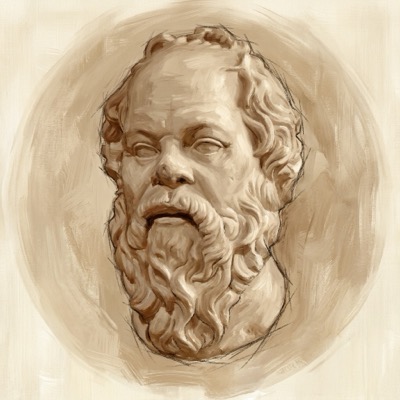
Socrates (c. 470–399 BC) was an Athenian philosopher who wrote nothing; he is known almost entirely through the accounts of his students Plato and Xenophon and the comic playwright Aristophanes, whose portraits disagree so sharply that reconstructing his own views — the 'Socratic problem' — may be impossible. As Plato depicts him, he questioned people reputed to be wise until their beliefs were shown to contradict one another, a method known as the elenchus, and claimed only that, unlike them, he did not think he knew what he did not know. In 399 BC an Athenian jury convicted him of impiety and of corrupting the young, and he was put to death by poison, traditionally hemlock, after refusing friends' offers to help him escape. Plato's Apology gives him the line that the unexamined life is not worth living, and nearly every later school of Greek philosophy — Plato's Academy, Aristotle's Lyceum, the Cynics, the Stoics — traced its roots to him.
Key Contributions
- Practiced the elenchus, questioning claims to knowledge until their contradictions surfaced — the root of what is now called the Socratic method
- Located his wisdom in not thinking he knew what he did not know (Plato, Apology 21d), the source of the paraphrase 'I know that I know nothing'
- Defended, in Plato's Apology, the conviction that the unexamined life is not worth living
- Was tried and executed in Athens in 399 BC for impiety and corrupting the young, refusing to escape
- Became the figure from whom the Academy, the Lyceum, the Cynics, and the Stoics all traced their descent, though he wrote nothing himself
Connections
Plato
InfluencedPhilosopher of Classical Athens
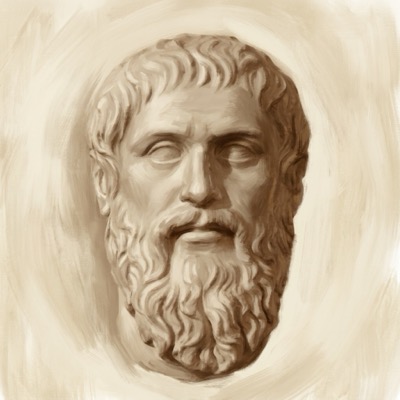
Nearly everything we think we know about Socrates passes through Plato, his student, who made him the speaking voice of almost every dialogue — so thoroughly that scholars call the resulting tangle the Socratic problem. Plato inherited the method, the question 'what is it?' pressed until confident answers come apart, and the conviction that philosophy happens between two people rather than on a page. Where Socrates ends and Plato begins is the oldest unresolved case of an author speaking through a character.
en.wikipedia.org · en.wikipedia.org
Karl Popper
InfluencedPhilosopher of Science
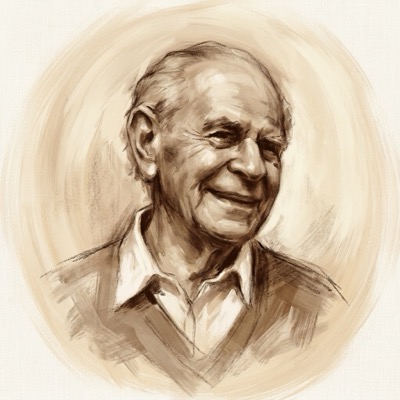
Popper split the teacher from the student: in The Open Society and Its Enemies he argued that 'the very things for which Socrates lived and died are the things which Plato tries to demolish.' What he kept from Socrates was the Apology's wisdom, knowing how little one knows, rebuilt as an epistemology in which knowledge is conjecture that has so far survived criticism. A system that cannot say it might be wrong fails the oldest test in this lineage.
en.wikipedia.org · icns.es
John Vervaeke
InfluencedCognitive Scientist & Philosopher
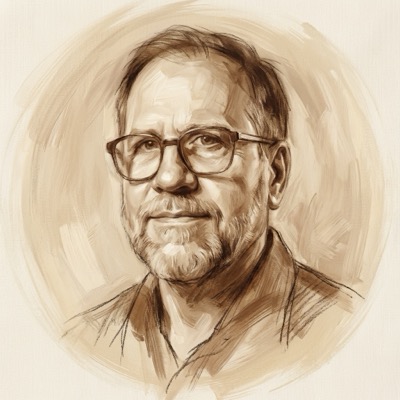
Episode 4 of Awakening from the Meaning Crisis is built around Socrates, read the way a cognitive scientist would read him: the elenchus as a practice for catching the mind in the act of fooling itself — 'you can bullshit yourself' — by making things feel relevant while drifting away from what is true. 'Know thyself,' on Vervaeke's reading, means learning how you operate, 'your owner's manual' rather than your autobiography. Relevance cut loose from truth is his name for what Socrates fought, and it describes a fluent machine as well as a person.
meaningcrisis.co
Dan Shipper
In contrastCEO & Co-founder, Every
Shipper builds his account of AI on a scene from Plato's Protagoras: Socrates refuses the old teacher's myths and demands a definition of excellence, on the grounds that what you cannot define you do not know. Shipper calls Socrates the father of rationalism and traces the demand through Galileo and Newton; neural networks, which learn without definitions, quietly vindicate Protagoras. The opposition lays the question bare: whether knowing has to be something you can state, or whether practice can carry it.
youtube.com · every.to

