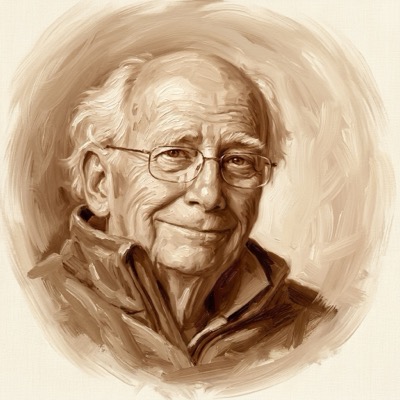
About
Michael Gazzaniga (born 1939) is an American cognitive neuroscientist and professor emeritus of psychology at the University of California, Santa Barbara. Often called the 'father of cognitive neuroscience,' he began his career in the 1960s conducting landmark split-brain research under Nobel laureate Roger Sperry at Caltech, studying patients whose cerebral hemispheres had been surgically separated. This work led him to propose the 'left-brain interpreter' — a left-hemisphere system that continually narrates and rationalizes our behavior, constructing the story we experience as a unified self. He co-founded the field of cognitive neuroscience, established the Cognitive Neuroscience Society, and directed the SAGE Center for the Study of the Mind. Through popular books such as Who's in Charge?, he has argued that although brains operate deterministically, responsibility and freedom are real properties that emerge at the social level.
Key Contributions
- Conducted foundational split-brain research under Roger Sperry, revealing the specialized functions of the two cerebral hemispheres
- Proposed the 'left-brain interpreter' — the mind's narrator that constructs a coherent sense of self from separate brain processes
- Co-founded the field of cognitive neuroscience and coined the term with George A. Miller
- Founded the Cognitive Neuroscience Society (1993) and served as founding editor of the Journal of Cognitive Neuroscience
- Authored influential books including Who's in Charge? (2011), arguing that brains are automatic but people are free
Videos & Interviews

Connections
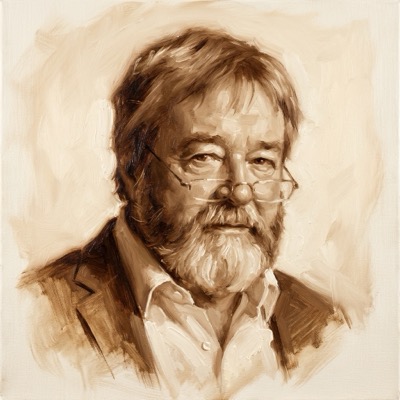
Iain McGilchrist
In contrastPsychiatrist, Neuroscientist & Author
Two readings of the same split-brain evidence. Gazzaniga showed a patient's left hemisphere a chicken claw and the right a snow scene; when the left hand picked a shovel, the speaking left hemisphere explained without hesitating that you need a shovel to clean out the chicken shed, and Gazzaniga named this narrator the interpreter, the glue of a unified self. McGilchrist reads the same confident invention as the left hemisphere's defining flaw, its habit of making up 'something plausible, that appears consistent' rather than admitting a gap, and builds a diagnosis of a whole culture on it.
fs.blog · en.wikipedia.org · McGilchrist, I. (2009). The Master and His Emissary. Yale University Press
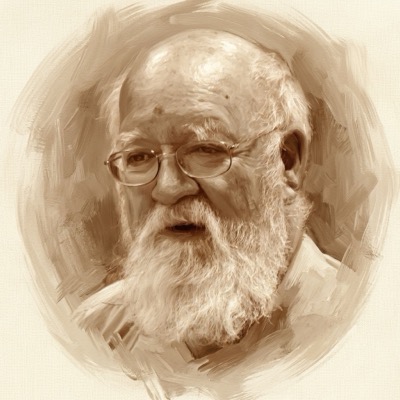
Daniel Dennett
KindredPhilosopher & Cognitive Scientist
Two compatibilists who reached the position from opposite ends. Gazzaniga started in the lab, with brains that act before the interpreter tells the story, and concluded that 'brains are automatic, but people are free'; Dennett started from philosophy and argued in Freedom Evolves that the free will worth wanting is something evolution and culture built, not a gap in physics. Each supplies what the other lacks: a mechanism for the philosopher, and permission for the scientist.
youtube.com · Dennett, D. (2003). Freedom Evolves. Viking

