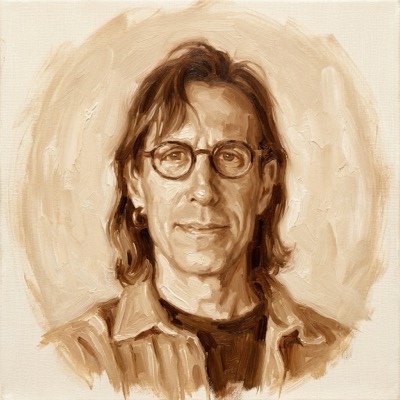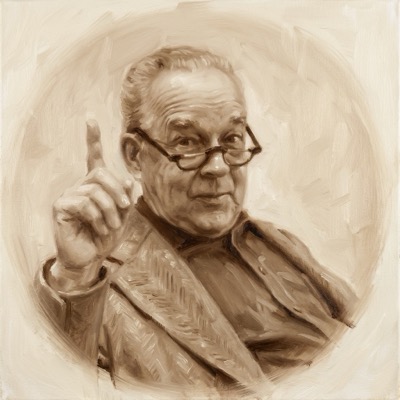
James J. Gibson
Psychologist & Founder of Ecological Psychology
關於
James Jerome Gibson (1904–1979) was an American psychologist who fundamentally challenged how we understand perception. After earning his Ph.D. at Princeton and working with the U.S. Air Force during WWII studying pilot perception, he spent three decades at Cornell developing his ecological approach — arguing that organisms perceive the world directly through structured information in the environment, not through internal mental reconstruction. His final work, The Ecological Approach to Visual Perception (1979), introduced the concept of affordances and became one of the most influential texts in cognitive science, reshaping fields from robotics to UX design.
主要貢獻
- Founded ecological psychology, arguing that perception is direct pickup of structured environmental information
- Introduced affordances as action possibilities defined by relations between organisms and environments
- Developed optic-flow theory, showing how visual motion specifies self-movement through space
- Grounded his theory in wartime aviation and later experimental work on how organisms perceive while moving
- Influenced embodied cognition, behavior-based robotics, and Don Norman's later design use of affordances
- His anti-representational stance remains productive, though many cognitive scientists think perception still needs internal modeling