關於
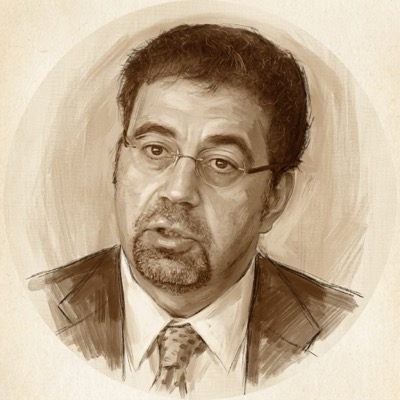
Daron Acemoglu (b. 1967) is an Institute Professor at MIT and, with Simon Johnson and James Robinson, a 2024 Nobel laureate in economics for work on how institutions shape prosperity. Turkish-American, educated at York and the LSE, he won the John Bates Clark Medal in 2005. His argument about technology is that its benefits are not automatic: whether a machine augments workers or merely replaces them is a choice made by the people directing it, and history is full of stretches where the gains went to a narrow few. He is also the most cited sceptic of large near-term AI productivity gains, estimating in 2024 that total factor productivity would rise by under 1% over a decade — a figure far below what the industry assumes, and one he arrived at by counting which tasks AI can actually do rather than by extrapolating from capability.
主要貢獻
- Shared the 2024 Nobel Memorial Prize in Economic Sciences for comparative studies of how institutions form and affect prosperity
- Co-wrote Power and Progress (2023) with Simon Johnson, arguing that who captures the gains from technology is a political choice rather than a technical inevitability
- Co-wrote Why Nations Fail (2012) and The Narrow Corridor (2019) with James Robinson, on institutions, liberty and the balance between state and society
- Published The Simple Macroeconomics of AI (2024), estimating AI's ten-year total factor productivity gain at under 1% by counting exposed tasks rather than extrapolating capability
- Won the John Bates Clark Medal in 2005 for contributions to labour economics, political economy and the economics of technology
影片與訪談

AI Is Not Improving Productivity: Nobel Laureate Daron Acemoglu
The economist who put a number on AI's productivity gain explains how he got it, and why it is so much smaller than the industry's. His method is to count which tasks the technology can actually take over and what each saves, rather than reasoning down from how capable the models look.
View Details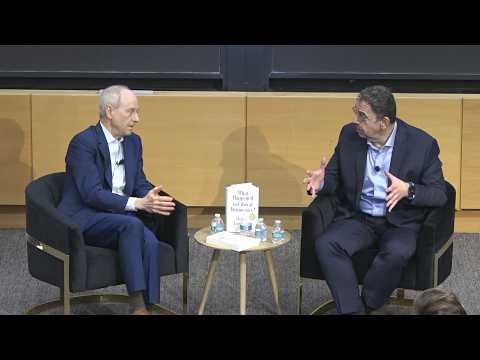
Daron Acemoglu and Michael Sandel: What Happened to Liberal Democracy?
At MIT's Stone Center, Michael Sandel questions Daron Acemoglu about his book What Happened to Liberal Democracy?: how center-left parties lost the working class, why redistribution cannot replace "the need to be needed" that Sandel calls contributive justice, why pro-worker AI should enhance work rather than replace it, and why a technology said to transform every part of life cannot be left to "a few frontier labs."
View Details思想連結
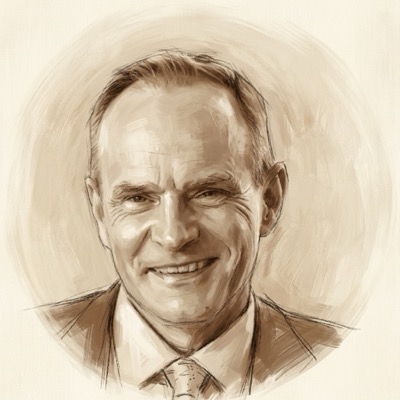
Simon Johnson
曾經合作創業學教授・MIT 史隆管理學院
《Power and Progress》(2023)的共同作者,也與 James Robinson 一起獲頒 2024 年諾貝爾經濟學獎,表彰他們對制度如何成就或摧毀繁榮的研究。那本書是一場橫跨一千年的論證,反對「技術自帶方向」這個想法:新機器帶來的好處會流向制度送它去的地方,而歷史上有很長的時間,那些好處幾乎沒有流到操作機器的人手上。Acemoglu 提供的是任務層級的經濟學,數清一項技術實際取代了什麼;Johnson 提供的是制度與金融史。這一對之所以在這裡重要,是因為他們從證據的兩端走到關於 AI 的同一個結論,而那個結論是一個選擇,不是一個預測。
Power and Progress: Our Thousand-Year Struggle Over Technology and Prosperity (PublicAffairs, 2023) · nobelprize.org · shapingwork.mit.edu

邁可·桑德爾
受其影響政治哲學家,哈佛大學
在麻省理工的那場對談中,Acemoglu 點名自己從桑德爾那裡受惠的三件事:社群的角色,來自桑德爾較早的著作;用功績主義解讀成敗,如何羞辱了那些過得沒那麼好的人;以及「貢獻正義」——人需要的不只是消費,還有自己正在貢獻的感受。這三點貫穿了 Acemoglu 的「勞工階級自由主義」:重分配取代不了薪資成長,也取代不了工作的尊嚴。
youtube.com · Daron Acemoglu, What Happened to Liberal Democracy? Remaking a Politics of Shared Prosperity (2026)

Daniel Susskind
曾經對談Economist, King's College London & Oxford
2024 年 5 月,牛津大學 AI 倫理研究所與牛津馬丁學院邀請艾塞默魯主講,主張 AI 目前的發展路徑有害於人類的興盛,並由薩斯金在座談中回應。兩人共享一個前提:自動化的成果不會自動被分享。他們的分歧在於:引導技術的方向是否就已足夠,還是一個工作變少的世界,終究需要全新的方式來分配收入與意義。
oxfordmartin.ox.ac.uk

Peter McCrory
思想同道Chief Economist, Anthropic
談到他希望團隊在 Anthropic 內部做什麼時,McCrory 用「經濟學文獻的語言」來說:這間實驗室能否「把導向型技術變遷(directed technical change)付諸操作」,讓模型朝增強勞動、而非取代勞動的方向發展?Acemoglu 在 2002 年將導向型技術變遷形式化,此後更在《Power and Progress》中完整論證:一項技術往哪個方向切,是一種選擇,而不是定律。McCrory 把這個問題帶進了打造這項技術的公司內部,並坦承他還不知道在那裡能否找到答案。
youtube.com · Acemoglu, "Directed Technical Change," Review of Economic Studies 69(4), 2002

