Kevin Roose, Scott Alexander & Jasmine Sun on Tales from the AGI Race | The Curve 2026
@GoldenGateInst
Featuring
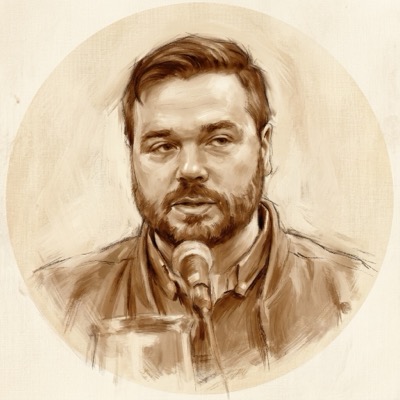
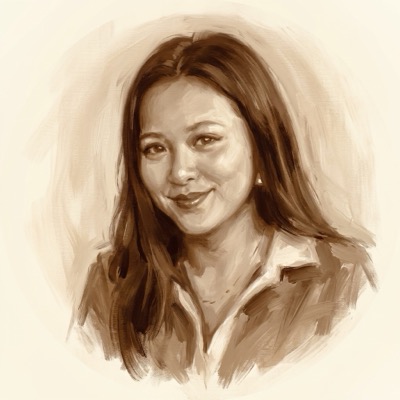
Scott Alexander opens with the line usually credited to Eleanor Roosevelt, that great minds discuss ideas, mediocre minds discuss events and small minds discuss people, and declares the evening “a protected space for us small and mediocre minds.” What follows is the first public conversation about The AGI Chronicles, recorded a few days before it went on sale. Alexander, of Astral Codex Ten, interviews Kevin Roose and Jasmine Sun, who researched the book with him and sat in on many of its more than 150 interviews. Roose says he wrote it because the labs’ own history was “being lost to Slack and Signal retention policies.”
The first half is character study, and Roose keeps handing the verdicts back. On Sam Altman he has sources who call him devoutly loyal and sources who call him a serial liar; the reading he finds closest is an “inveterate people pleaser” whose gift is telling each person what they want to hear, which breaks when two people compare notes. On Anthropic, his reporting is that the founders did not plan to sell a commercial model at all (one idea was a hedge fund run on Claude), that a founding document put the cost of AGI at about $10 billion, and that ChatGPT shipped because John Schulman heard a rumor Claude was about to launch, so “Anthropic accidentally started the race.” The company was nearly Sparrow Systems, after the parable in Nick Bostrom’s Superintelligence, until the domain turned out to be taken. Demis Hassabis is “the most competitive man in the world,” inconsolable after losing at ping-pong to Geoffrey Hinton in front of his own researchers, sincere about science, and wrong about language models for too long. Sun adds that he was the hardest person to get dirt on, and Roose that the worst his critics say is that he is “vain but not evil.”
Then the claim underneath the gossip. Roose set out to write about technology and found “it was really a story about belief,” down to Google’s duelling “say AGI” and “don’t say AGI” memos. An early reader told him the book could have been titled “F*** That Guy,” since so many labs began as someone getting back at someone. Sun puts it more sharply: the conflicts are “strikingly non-ideological,” and one founder’s case for why another cannot be trusted with AGI is about the man far more than about any alignment technique. Roose calls it “petty personal grudges all the way down,” then qualifies it. Incentives would drive the race even among friends, his p(doom) stays “a solid 10,” and he thinks the outcome was lucky: “People don’t realize how close we came to a world in which Facebook AI research was the leading AI effort.”
At about 24:40 Roose turns the interview around, because Alexander is a character in the book: he wrote, after GPT-2, that these systems looked like they would keep scaling, while most of the field still called them autocomplete. Alexander credits Gwern with doing the homework, by way of Hans Moravec, and himself with luck. He is a psychiatrist drawn to predictive coding, the view that a brain learns by predicting its next sensation, so GPT-2 looked familiar: “so it’s doing the same thing as the human brain.” A friend’s work on animal intelligence, which found it tracks the count of cortical neurons, did the rest. The phrase “big blob of compute,” the title of Dario Amodei’s 2017 memo, he thinks he first heard from Ilya Sutskever around 2018.
The questions from the floor carry the present tense. On the “worthy successor” idea, Roose is flat: “I have a child. I don’t want to have a worthy successor other than him.” On what would move their odds, Alexander says warning shots, and that labs controlling their systems too well may be the bad case, because then nobody worries until it is too late; a Hugging Face-scale incident every month until 2030 and “maybe we’ve got a pretty good chance.” Roose, who covered social media, expects politicians to move only when it lands close to home, as it did when platforms touched an election. Sun asks whether anyone could coordinate a pause even if they chose to, and argues for patience with everyone outside the room: most people “haven’t made up their minds yet.”
Three things to hold beside it. The session bills itself as gossip, and the stories are Roose’s reporting, much of it on background, with nothing here to check them against. Alexander’s own review is the fair one: he still cannot tell whether Altman holding that much power would be good or bad, and “these contradictions are not yet resolved.” And Sun’s part is larger than her joke that she was “replaced by a team of Claudes once Opus got good enough”; she closes by saying she learned to report by spending two days a week beside Roose through 2025. Roose’s interviews with Walter Isaacson, Nilay Patel and Natalia Quintero about the book are in this collection, as are Dwarkesh Patel’s “The OpenAI/Hugging Face attack, clearly explained” and Helen Toner’s talk from the same conference.

