Are we separate from our machines?
The cuts
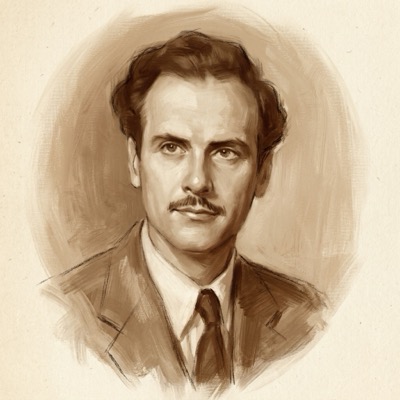
Our tools are extensions of us — of the body, and finally of the nervous system. We shape them, and thereafter they shape us, until where the person ends and the equipment begins is no longer obvious.
Recast technologies as prosthetic parts of us rather than objects apart from us — the boundary as something a medium quietly moves.
Understanding Media: The Extensions of Man1964
We are natural-born cyborgs. The human mind is built to annex notebooks, instruments, and now devices into itself; the skin-bag was never the real boundary of the self, only the most visible one.
Made the merger cognitive, not science-fiction: the mind routinely incorporates non-biological tools, so the thinking system already extends past the body.
Natural-Born Cyborgs: Minds, Technologies, and the Future of Human Intelligence2003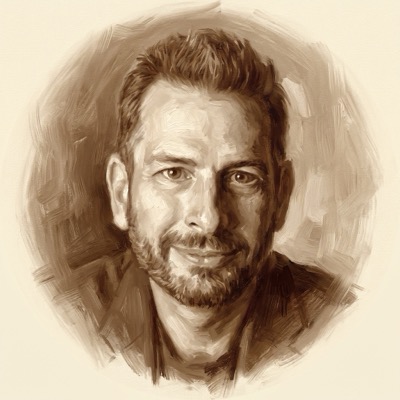
We merged with machines a long time ago. Life uses technology all the way down, and we've co-evolved with ours past the point of subject and object — there is no clean, separate 'us,' set apart from our machines, waiting to be protected or replaced.
Pushed the merger from cognition to biology and history: no machines without humans, no ten billion humans without machines — one symbiosis, not two camps.
We Merged With Machines a Long Time Ago (with Carlo Rovelli)2026The tensions
The question sounds rhetorical until you try to draw the line. McLuhan moved it first: a technology is an extension of us — the wheel of the foot, the book of the eye, the network of the nervous system — and every extension quietly remakes the one who uses it. Where the person stops and the equipment starts was never as fixed as it feels.
Clark makes the case from the inside. The human mind is unusual not for what it holds but for how readily it annexes what it doesn’t — a notebook, a compass, a phone — into the machinery of thought itself. If the thinking system already runs partly outside the skull, then the skin was only the most visible boundary, not the real one. Blaise pushes the same thread through biology and history: life has used technology all the way down, we could not exist in our numbers without it, and it could not exist at all without us. On that view the “human versus machine” framing is a category error — there is one co-evolving system, not two.
And yet the intuition that we are separate is stubborn, and maybe it protects something worth keeping. Whether the boundary is real, useful, or a comforting illusion — and what we lose by erasing it — is not settled here.