About
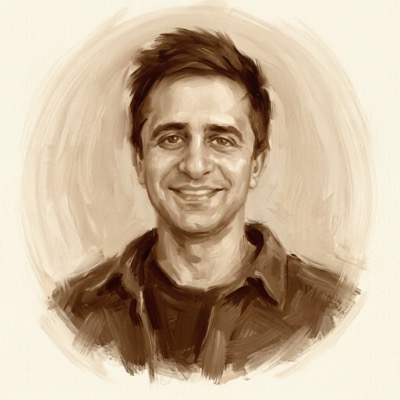
Vishal Maini is the founder and managing partner of Mythos Ventures, an early-stage fund backing transformative AI companies, which closed a $14 million first fund in 2023. Before that he worked at the lending startup Upstart. He then spent a year teaching himself machine learning and co-wrote the guide Machine Learning for Humans with Samer Sabri. He joined DeepMind in London in early 2018 and worked on its communications and policy team until 2022, engaging with the AI community and communicating the lab's research, especially its safety team's work. He has said that when he joined, the lab did not permit external discussion of the possibility of human extinction from AI, and that the policy was relaxed after months of internal advocacy.
Key Contributions
- Worked on DeepMind's communications and policy team from 2018 to 2022, communicating the lab's AI safety research to the public
- Co-authored "Scalable agent alignment via reward modeling: a research direction" (2018) with Jan Leike, David Krueger, Tom Everitt, Miljan Martic and Shane Legg
- Co-authored "Reducing Sentiment Bias in Language Models via Counterfactual Evaluation" (2019)
- Co-wrote Machine Learning for Humans with Samer Sabri, a plain-English introduction to machine learning
- Founded Mythos Ventures, closing a $14 million first fund in 2023 to invest in transformative AI startups
Videos & Interviews
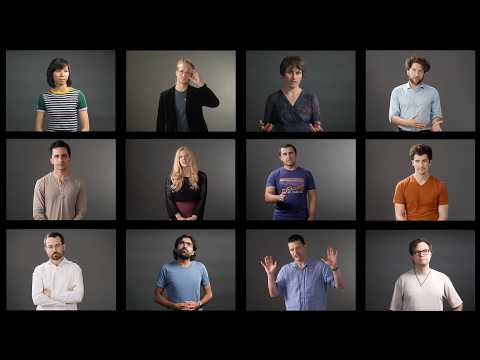
What’s Coming Next in AI? Hear From the Insiders
A four-minute compilation from the From Inside AI series, cut from interviews with current and former staff of OpenAI, Google DeepMind and Anthropic. Nanda's "at least a 10% chance" sits beside Irving's coin flip; Turner and Ladish give their reasons for leaving Google and Anthropic; Kokotajlo and Ladish describe the Hugging Face attack. It moves from how little the labs understand their models, through the race, to the case for pacing, and ends on Ladish: "We have choices to make."
View Details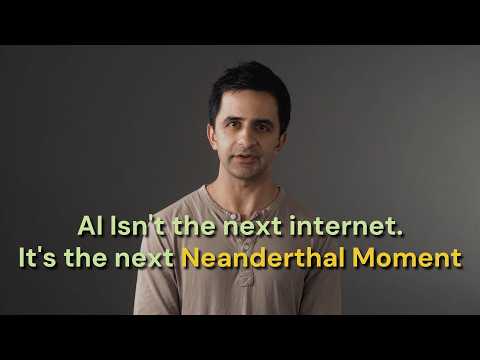
AI Isn't the Next Internet. It's the Next Neanderthal Moment
Maini, on Google DeepMind's strategy and communications team from 2018 to 2022, argues that the right analogy for AI is not electricity or the internet but Homo sapiens outcompeting Neanderthals, and that AGI is "a starting line, not a finish line". He reads out his own post recalling that, when he joined, researchers were PR-trained to deflect questions about extinction until months of advocacy changed the policy. He cites Dario Amodei's three levers for keeping a lead over China, stressing security against weight theft. He left for personal rather than protest reasons, and says he feels hope.
View DetailsConnections
Dario Amodei
Influenced byCEO & Co-founder, Anthropic
DeepMind's 2018 safety-research post, which Maini co-wrote with Pedro Ortega, took its cleaning-robot examples from Amodei and colleagues' Concrete Problems in AI Safety and listed that paper among the work that had 'informed our thinking.' Eight years later Maini argues that racing China is no strategy if control is lost, and endorses what he calls Dario's three more viable levers for keeping a lead: tighter chip export controls, a crackdown on model distillation, and above all securing model weights against theft.
web.archive.org · youtube.com
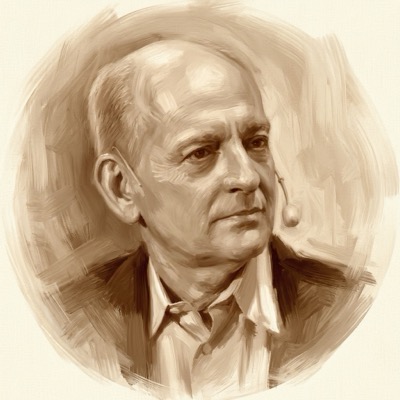
Stuart Russell
KindredProfessor of Computer Science, UC Berkeley
Maini's case that AI is a Neanderthal moment rather than a new internet reads as Russell's gorilla problem moved to a closer cousin: what becomes of a species once a more capable one shares its world. Russell asks whether humans can keep their 'supremacy and autonomy' among machines of substantially greater intelligence; Maini sharpens it by noting that the gap between Neanderthals and Homo sapiens was far narrower than the one we should expect with advanced AI, so the precedent is 'not actually so reassuring.' Neither stops at fatalism — Russell because we get to design the newcomer, Maini because there are still ways through the transition.
youtube.com · forum.effectivealtruism.org · Stuart Russell, Human Compatible (2019)
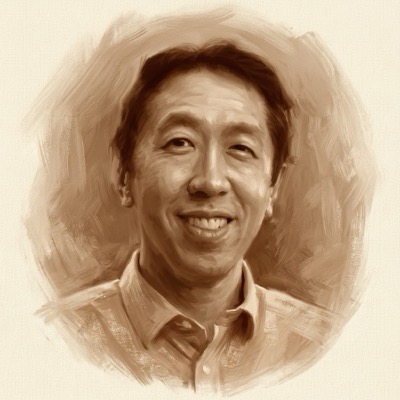
Andrew Ng
In contrastAI Pioneer & Educator
Machine Learning for Humans, the guide Maini co-wrote, recommends Andrew Ng's Coursera course first among its machine-learning courses and borrows an illustration from it. On the larger picture the student and the teacher part ways. Ng's claim that AI will transform nearly every industry the way electricity did a century ago is exactly the analogy Maini now rejects: electricity and the internet are not quite right, he says; the better precedent is Homo sapiens arriving among the Neanderthals.
web.archive.org · gsb.stanford.edu · youtube.com