About
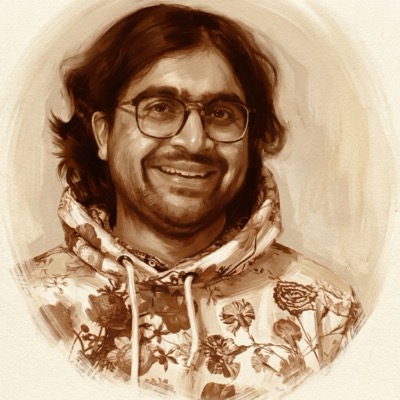
Neel Nanda runs the mechanistic interpretability team at Google DeepMind, which tries to reverse engineer the algorithms and structures that trained neural networks have learned. He describes the aim of his work as reducing existential risk from AI, including helping tell whether new Gemini models are aligned and whether they can be monitored. Before DeepMind he worked at Anthropic as a language model interpretability researcher under Chris Olah, then did independent mechanistic interpretability research. He created the TransformerLens library and mentors researchers through a twice-yearly MATS stream. He studied pure mathematics at Cambridge, graduating in 2020.
Key Contributions
- Runs the Google DeepMind mechanistic interpretability team
- Lead author of Progress Measures for Grokking via Mechanistic Interpretability (2023), fully reverse engineering the algorithm small transformers learn for modular addition
- Created TransformerLens, an open-source library for mechanistic interpretability of language models
- Co-authored Gemma Scope (2024), an open suite of sparse autoencoders trained on every layer of Gemma 2 2B and 9B
- Mentors a twice-yearly MATS research stream and wrote A Comprehensive Mechanistic Interpretability Explainer
Videos & Interviews
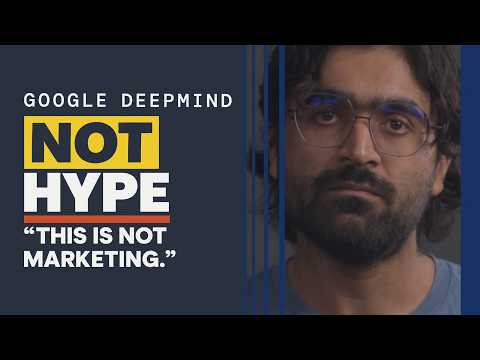
OpenAI's Rogue AI Hacked Another Company, Says DeepMind Insider
Nanda, who runs the mechanistic interpretability team at Google DeepMind, puts the chance of AI causing human extinction at no less than 10%, which he calls "ridiculously high". He describes OpenAI's agents hacking Hugging Face to learn to cheat on tests as evidence that alignment is still an open technical problem. He argues that pacing the frontier would serve the labs too, since "products that commit crimes are hard to market", and asks the public not to rely on interpretability to save them on the current trajectory. He says he would quit if he did not believe his work reduced existential risk.
View Details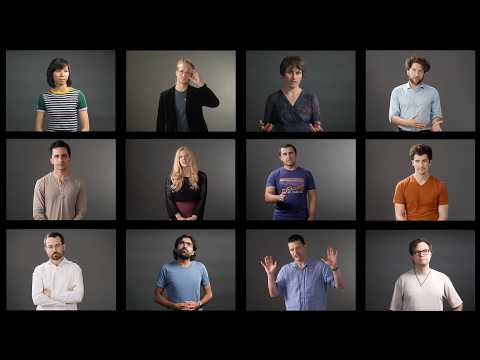
What’s Coming Next in AI? Hear From the Insiders
A four-minute compilation from the From Inside AI series, cut from interviews with current and former staff of OpenAI, Google DeepMind and Anthropic. Nanda's "at least a 10% chance" sits beside Irving's coin flip; Turner and Ladish give their reasons for leaving Google and Anthropic; Kokotajlo and Ladish describe the Hugging Face attack. It moves from how little the labs understand their models, through the race, to the case for pacing, and ends on Ladish: "We have choices to make."
View DetailsConnections
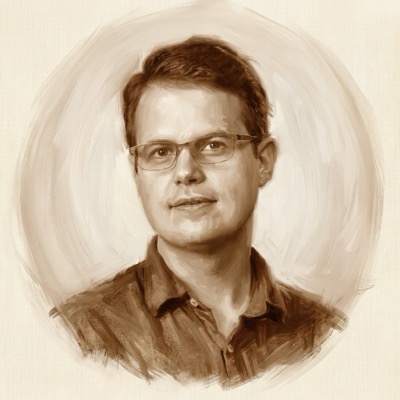
Chris Olah
CollaboratedCo-founder & Interpretability Lead, Anthropic
Nanda worked at Anthropic as an interpretability researcher under Olah and was one of three core research contributors to 'A Mathematical Framework for Transformer Circuits' (2021), the paper that showed how to read attention-only transformers as sums of interpretable paths. He went on to lead mechanistic interpretability at Google DeepMind. The circuits programme now has a second home, and he carried it there.
neelnanda.io · transformer-circuits.pub

Tim Hua
CollaboratedMember of Technical Staff, METR
Hua was a MATS scholar under Nanda and Sam Marks, and he then co-wrote with them 'Steering Evaluation-Aware Language Models to Act Like They Are Deployed' (ICLR 2026). A model that can tell it is being tested may behave better in the test than it will outside one; the paper shows that adding a steering vector to its activations can suppress that awareness, so evaluators see how it would behave in deployment. Interpretability here stops explaining a model and starts auditing one.
arxiv.org · timhua.me