
Melanie Mitchell
Professor, Santa Fe Institute
About
Melanie Mitchell is a professor at the Santa Fe Institute working on conceptual abstraction, analogy-making, and complex systems. She earned her PhD at the University of Michigan in 1990 under Douglas Hofstadter and John Holland, building Copycat — a computer model of analogy-making that treats perception and concepts as inseparable. Her books include Complexity: A Guided Tour (2009), winner of the Phi Beta Kappa Science Book Award, and Artificial Intelligence: A Guide for Thinking Humans (2019). She has become one of the field's most careful voices on what AI systems actually understand — surveying that debate in PNAS with David Krakauer, and arguing the con side of the 2023 Munk Debate on AI as existential threat. She received the Herbert A. Simon Award in 2020.
Key Contributions
- Built Copycat with Douglas Hofstadter — a computer model of analogy-making that treats concepts and perception as inseparable, decades before 'reasoning' benchmarks
- Wrote Complexity: A Guided Tour (2009), winner of the Phi Beta Kappa Science Book Award
- Wrote Artificial Intelligence: A Guide for Thinking Humans (2019), a sober tour of what AI can and cannot do
- Co-authored 'The debate over understanding in AI's large language models' (PNAS 2023), the standing map of the field's deepest disagreement
- Argued the con side of the 2023 Munk Debate on AI existential risk alongside Yann LeCun — skeptical of doom without being dismissive of harms
Videos & Interviews
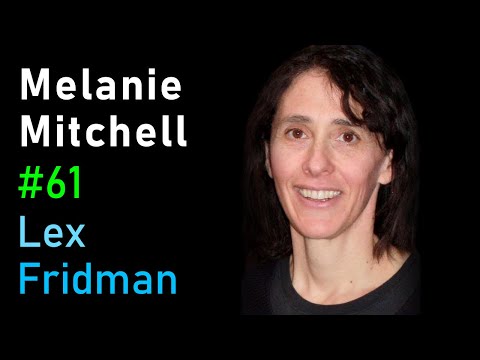
Melanie Mitchell: Concepts, Analogies, Common Sense & Future of AI | Lex Fridman Podcast #61
Mitchell walks through the case she has made her career on: that concepts and analogies are the core of cognition, and that systems without them will keep surprising us with their brittleness. Recorded before the LLM wave, the conversation reads differently now — the questions she raises about common sense and abstraction are the ones the field is still arguing about, with much larger models and much higher stakes.
View Details
Munk Debate on Artificial Intelligence | Bengio & Tegmark vs. Mitchell & LeCun
Four of the field's most prominent voices, two by two, on one resolution: be it resolved, AI research and development poses an existential threat. Bengio and Tegmark argue the pro; Mitchell and LeCun the con — and the hall moved toward the skeptics. What makes the debate worth watching is not the verdict but the spectacle of experts who share a technical picture and still forecast opposite futures: the clearest evidence that AI risk is not a question expertise alone can settle.
View DetailsPapers & Publications
Connections
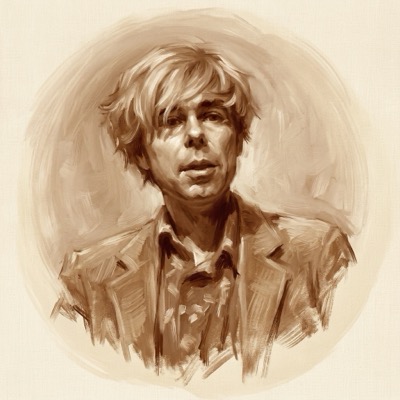
Douglas Hofstadter
Influenced byProfessor of Cognitive Science, Indiana University
Mitchell wrote to Hofstadter after reading Gödel, Escher, Bach, became his doctoral student at Michigan, and built Copycat with him — her dissertation is the model's definitive account. Everything in her later career runs on what the apprenticeship installed: that analogy is the core of cognition, and that claims about machine understanding should be tested against it. When she surveys the LLM debate today, she is asking the question his lab spent the 1980s making precise.
en.wikipedia.org · en.wikipedia.org
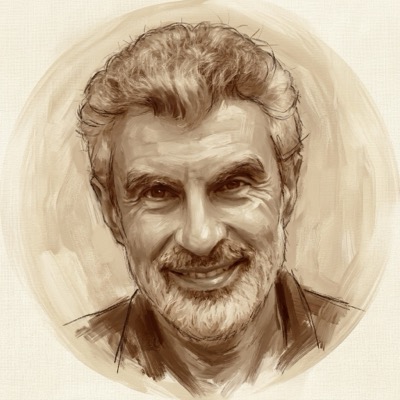
Yoshua Bengio
DebatedAI Pioneer & Safety Researcher
At the 2023 Munk Debate — on this site — they took opposite podiums on whether AI research poses an existential threat, Bengio arguing that his own life's work had become dangerous, Mitchell answering that the doom scenarios smuggle in assumptions about intelligence the evidence does not support. Her closing point was characteristic: the real risks are the ones already here, and apocalypse talk crowds them out. The hall moved three points toward her side.
youtube.com · en.wikipedia.org

Yann LeCun
In conversationExecutive Chairman & Co-founder, AMI Labs; Professor, NYU
They shared the con side of the June 2023 Munk Debate — be it resolved, AI research and development poses an existential threat — and divided the work by temperament. Mitchell dismantled the three doom scenarios one at a time, naming the 'fallacy of dumb superintelligence': a machine smarter than us in all respects that somehow cannot grasp why we asked it to fix the climate. LeCun attacked the premise underneath, that intelligence brings a will to dominate — 'I only hire people who are smarter than me; none of them want my job.' The hall moved toward them. A scientist of complexity and an engineer of architectures, agreeing that the fear is a category error.
youtube.com · en.wikipedia.org
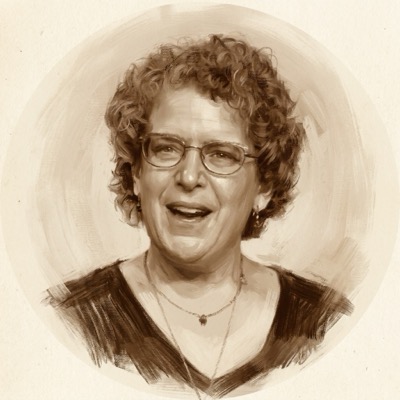
Emily Bender
KindredComputational Linguist
Two of the field's most careful skeptics about LLM understanding, operating at different altitudes. Bender is a pole of the debate — form without grounding cannot be meaning, full stop; Mitchell is its cartographer, whose PNAS survey with David Krakauer mapped both sides without planting a flag. Read Bender to feel the argument's force, Mitchell to see its shape.