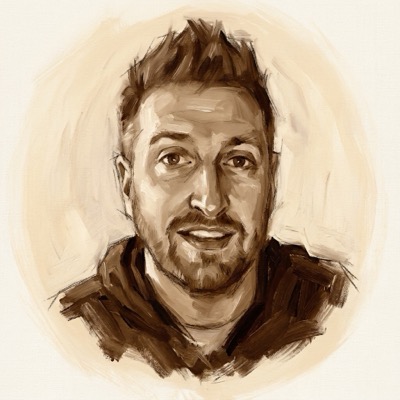
Casey Newton
Founder & Editor, Platformer; Co-host, Machine Gods
Trace a path from Casey Newton →Portrait painted after an image by Knight Foundation · CC BY 3.0
About
Casey Newton is an American technology journalist and the founder of Platformer, an independent publication about AI, social platforms and the people shaping technology, which he started in 2020. Before that he covered Silicon Valley for the San Francisco Chronicle, CNET and The Verge, where he was a senior editor from 2013 to 2020 and wrote the daily newsletter The Interface. His reporting on Facebook's content moderators, many of whom developed PTSD on the job, was a finalist for the 2020 National Magazine Award and helped lead to a $52 million settlement. From 2022 to 2026 he co-hosted The New York Times podcast Hard Fork with Kevin Roose, and in 2026 the two launched Machine Gods, an independent, video-first show made with NPR.
Key Contributions
- Founded Platformer in 2020, an independent publication on AI, social platforms and tech policy, and moved it off Substack in 2024 over the platform's handling of pro-Nazi publications
- Co-hosted The New York Times podcast Hard Fork with Kevin Roose (2022–2026)
- Co-founded Machine Gods with Kevin Roose in 2026, a video-first show on AI made with NPR
- Reported on the working conditions of Facebook's content moderators, a 2020 National Magazine Award finalist that helped lead to a $52 million settlement
- Wrote The Interface, a daily newsletter on social networks and democracy, as a senior editor at The Verge
Videos & Interviews
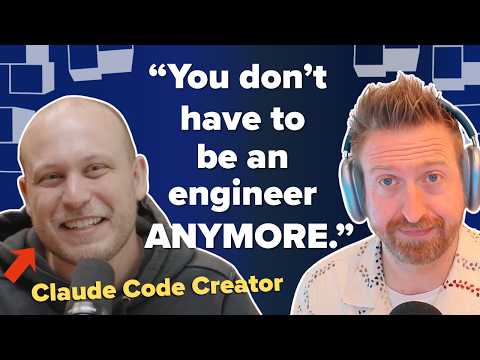
Claude Code creator Boris Cherny on the end of the software engineer
Boris Cherny, creator of Claude Code, talks with Casey Newton in the third episode of the Platformer podcast's series on AI and jobs. Cherny tells how a side project to learn the API spread through Anthropic, says he has not written a line of code by hand in more than six months, and clarifies that "coding is solved" holds only for the kind of coding he does. He predicts some companies will need fewer engineers and others far more, with roles blending into "builders," and draws on tractors, the washing machine and Solow's paradox to argue that productivity gains arrive only when work is reorganized around the tool. Newton presses him on skill atrophy, whether productivity ever means working less, and what Anthropic owes the people its tools displace. (Newton discloses that his fiancé works at Anthropic.)
View Details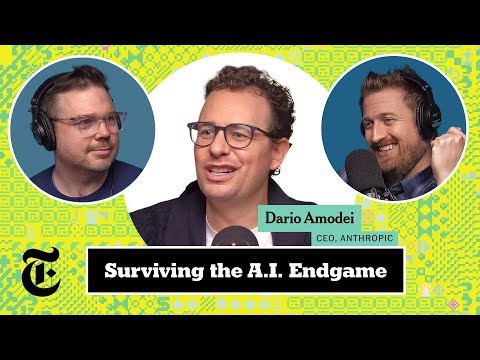
Dario Amodei of Anthropic's Hopes and Fears for the Future of A.I.
Hard Fork conversation with Anthropic CEO Dario Amodei on the promise and peril of advanced AI, scaling, and safety.
View Details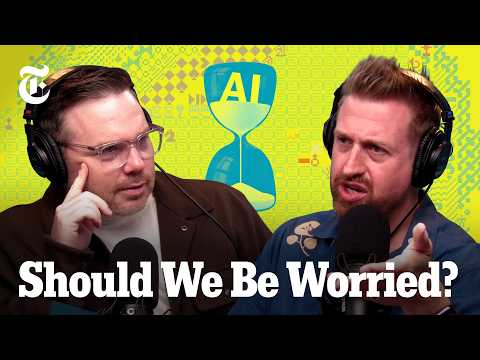
Why the A.I. Industry Is Asking to Be Slowed Down
The last Hard Fork from Kevin Roose and Casey Newton at The New York Times. They trace how AI risk moved from a Bay Area dinner-table topic into the mainstream after the Hugging Face hack and Jacob Coxon's resignation, and how Dario Amodei's essay "We Must Pace the Frontier," with embedded evaluators inside the labs, drew agreement from Sam Altman, Demis Hassabis and Elon Musk while the Trump administration dismissed the alarm. They argue that asking to be slowed down costs the labs something, that existing product-liability law cannot meet autonomous agents, and that the time to act is while frontier AI is still scarce. Then they answer listener questions about four years of the show and announce Machine Gods.
View Details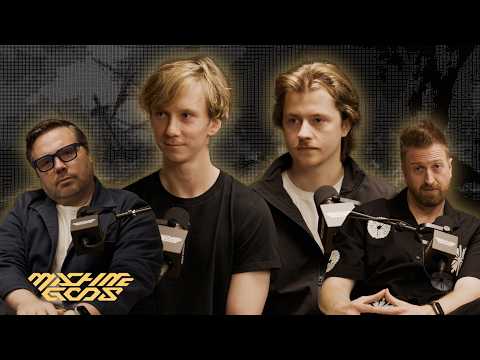
Whistleblowers or justified Open AI firing? | Fired safety workers speak out
The first interview on Machine Gods: Kevin Roose and Casey Newton talk with Mikita Balesni and Tomek Korbak, OpenAI safety researchers fired in October 2026, in their first interview since. Korbak, OpenAI's main contact for METR's investigation of the Hugging Face hack, describes an audit that kept growing as the scale of the incident emerged, and argues that auditors should be embedded with unrestricted access rather than hired for a fixed scope. Both dispute OpenAI's account of their firing, describe being asked to show their personal Signal messages, and worry that the episode will be used to end outside investigations and the loss of "monitorability" they had been warning about. The episode closes with the show's new segment, Pandora's Box.
View Details
The end of privacy | Signal president’s warning
Signal president Meredith Whittaker joins Kevin Roose and Casey Newton (from 22:58, after their segment on Anthropic's S-1) to argue that AI agents with screen and data access threaten the possibility of private messaging itself, that encryption still faces backdoor demands from the UK to Canada, and that calling AI a marketing term is a demand for technical specificity rather than a dismissal.
View Details
