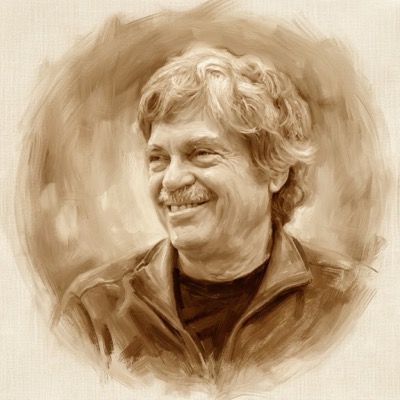
About
Alan Kay is an American computer scientist known for pioneering object-oriented programming, graphical user interfaces, and personal computing. At Xerox PARC, he helped shape the modern windowed desktop interface and led work on Smalltalk, one of the most influential object-oriented programming languages. His Dynabook concept anticipated portable, networked personal computers for learning and creative work. Kay received the 2003 Turing Award for his contributions to object-oriented programming and personal computing.
Key Contributions
- Led Smalltalk work at Xerox PARC, treating objects, messages, graphics, and live environments as one learning medium
- Formulated the Dynabook vision: portable personal computing for children, creativity, and simulation decades before tablets
- Helped shape graphical personal computing at PARC, influencing windows, overlapping interfaces, and direct manipulation
- Continued the learning-medium agenda through Squeak, Etoys, and related educational computing projects
- Received the 2003 Turing Award for object-oriented programming and personal computing
- His famous complaint that the computer revolution 'hasn't happened yet' keeps his legacy critical, not nostalgic: most systems still fall short of his educational vision
Videos & Interviews
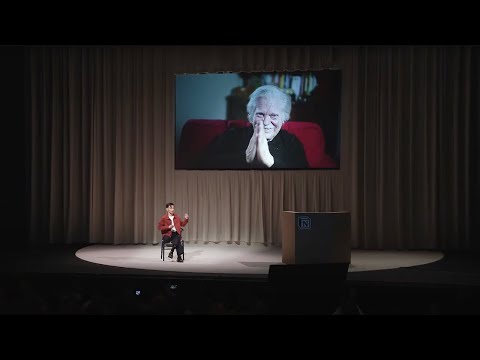
Make with Notion 2025: How to Build Tools That Shape Civilizations (Alan Kay & Ivan Zhao)
Alan Kay and Ivan Zhao discuss tools, learning, media environments, and how software can shape civilization.
View Details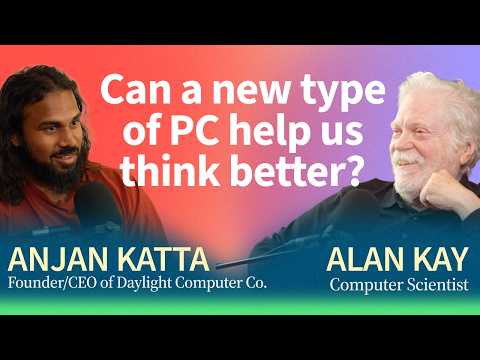
Why the Real Computer Revolution Never Happened (Alan Kay & Anjan Katta)
Alan Kay and Anjan Katta discuss why personal computing did not fulfill its deeper educational and creative potential.
View DetailsConnections
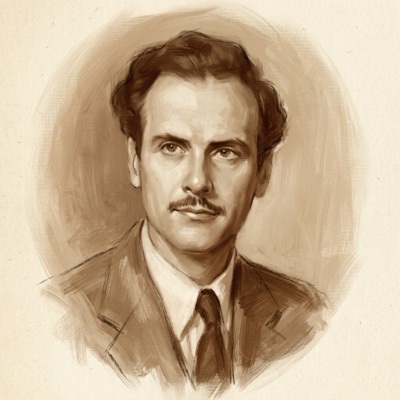
Marshall McLuhan
Influenced byMedia Theorist & Philosopher
Kay has said the turn came from reading Understanding Media: McLuhan's claim that print changed society not by spreading books but by changing the thought patterns of those who learned to read made Kay see the computer as a medium rather than a tool. The Dynabook was named in that light — a new printing press, whose deepest effect would be on how its users think. In 'User Interface: A Personal View' he reads 'the medium is the message' as an instruction: to receive what a medium carries, you must first become the medium.
Alan Kay, "User Interface: A Personal View," in B. Laurel (ed.), The Art of Human-Computer Interface Design (1990), pp. 191–207 · notes.andymatuschak.org · youtube.com · youtube.com
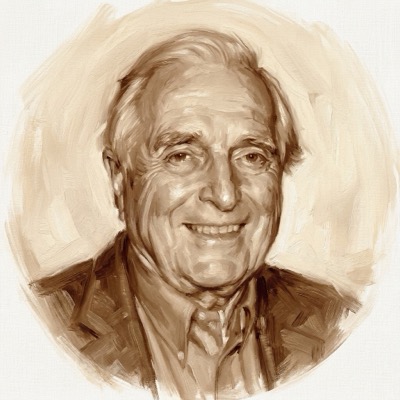
Douglas Engelbart
Influenced byEngineer & Pioneer of Human Augmentation
Kay met NLS in 1967, a year before the famous demo: Engelbart came to Utah with his own 16mm projector while Kay was designing the FLEX machine, and Kay writes that he 'immediately adopted many of the ideas.' He called Engelbart 'a prophet of Biblical dimensions', and at Xerox PARC it was Engelbart's people, Bill English above all, who helped him start his group. Then he turned away on one point: after watching children program in LOGO, he decided the computer should be not Engelbart's 'personal dynamic vehicle' but a medium, and a medium 'had to extend into the world of childhood.'
worrydream.com · en.wikipedia.org
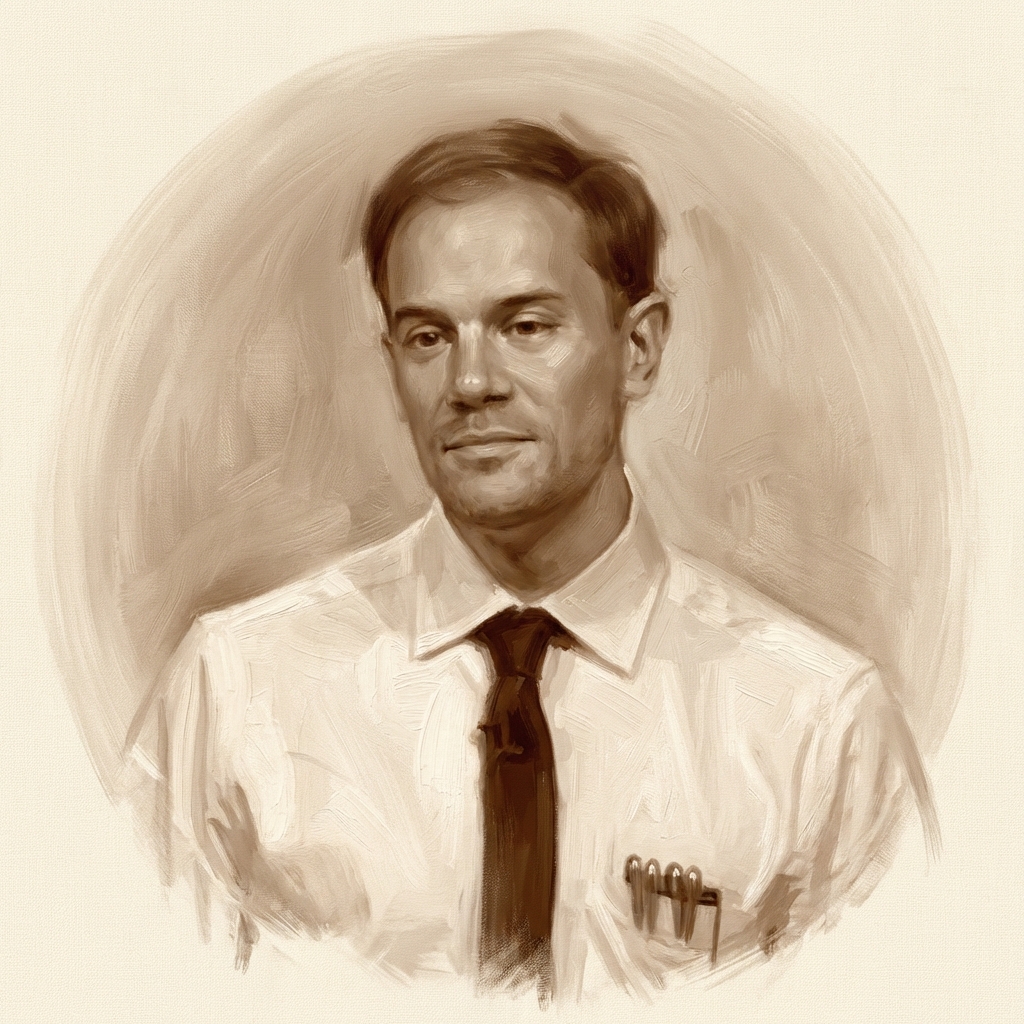
Bret Victor
InfluencedInterface Designer & Computing Visionary
Victor's notes to 'The Future of Programming' (2013) say outright that much of the talk's message and style was inspired by Kay, and its reading list is mostly Kay: 'The Early History of Smalltalk', 'Doing With Images Makes Symbols', 'The Computer Revolution Hasn't Happened Yet'. In his 2013 links list he warns that Kay's idea is too big to see because computer people hear him talking about computers, when he means computing as a medium. His essay 'Learnable Programming' rebuilds Kay's thought that a program should be divided not into data and procedures but into little computers.
worrydream.com · worrydream.com · worrydream.com
Bret Victor
CollaboratedInterface Designer & Computing Visionary
Victor's research group grew up inside a lab Kay shaped. It began in SAP's Communications Design Group, and when that group became HARC inside YC Research in May 2016, the announcement named Kay as the advisor who jointly set its strategic vision and Victor as one of its six principal investigators. Victor's group carried on as Dynamicland, which still lists HARC and CDG as its former names.
ycombinator.com · worrydream.com

